Showing posts with label Roger Duvoisin. Show all posts

Wednesday, January 10, 2024

The Art of the Redraw: Morticia and Lurch by Charles Addams

Three previously-unknown redraws of New Yorker cartoons by Charles Addams came to light when they were brought to auction early in 2021. One of them has the character we know today as Lurch bringing the one we call Morticia her tea. (Addams Family characters were not assigned names until the 1964 television series a full quarter century after this drawing was published.) There is a broken table lamp that serves as a single light source, allowing the two figures to be front lit while casting dark shadows behind them. Addams in 1939 was already a master of architectural detail, presenting it in a state of dilapidation to enhance the gothic, spooky atmosphere.

"Oh, it's you!  For a moment you gave me quite a start."
Charles Addams
The New Yorker, November 25, 1939, p. 16

A cartoon by Charles Addams and a spot drawing by Roger Duvoisin

The cartoon was also to appear in Drawn and Quartered (1942), Addams's first collection:

https://thecarycollection.com/products/drawn-and-quartered-1942-addams-chas

It was later used on the cover of the first revised paperback edition published by Pocket Books (1964):


There was a published print with the caption printed in Addams's hand from his original:

https://www.ebay.ca/itm/153076797703


The redraw of this cartoon was made no later than the late 1940s. There are some noteworthy differences from the New Yorker drawing, particularly the peering presence of Thing, above. It was sold at auction in early 2021 for a hammer price of 5500 GBP.

"Oh, it's you!  For a moment you gave me quite a start."
Charles Addams
Redraw after
The New Yorker, November 25, 1939, p. 16

"Oh, it's you!  For a moment you gave me quite a start."
Charles Addams
Redraw after
The New Yorker, November 25, 1939, p. 16

"Oh, it's you!  For a moment you gave me quite a start."
Charles Addams
Redraw after
The New Yorker, November 25, 1939, p. 16

Chas Addams's signature is on the left, not the right, in the redraw. It is also a later signature than seen in the 1939 example.

Detail of Thing peering down from above. Thing is not to be found in the New Yorker drawing, although the ceiling panel is there.

Detail with foxing

Verso

Detail of verso

The handwritten caption is in all capital letters. Is it in Addams's hand?

Detail of Morticia and Lurch

"Oh, it's you!  For a moment you gave me quite a start."
Charles Addams
Redraw after
The New Yorker, November 25, 1939, p. 16

Charles Addams
Lay's Auctioneers Fine Art Sale of January 29, 2021


Here they are, published drawing and redraw, presented together for comparison:

"Oh, it's you!  For a moment you gave me quite a start."
Charles Addams
The New Yorker, November 25, 1939, p. 16

"Oh, it's you!  For a moment you gave me quite a start."
Charles Addams
Redraw after
The New Yorker, November 25, 1939, p. 16


Note:  I wish again to thank the uncredited individual who told me of this sale back when it happened. You know who you are.


* * *

Finally, we have a bonus for tree lovers from the New Yorker page opposite the Addams cartoon:
Tree Movers
Spot drawing
Roger Duvoisin
The New Yorker, November 25, 1939, p. 17


04554
Thursday, September 23, 2021

Richard Taylor: A Dram of Drambuie

In 1949, an advertisement that appeared in The New Yorker, and no doubt elsewhere, suggested that readers try a digestif imported from Scotland: "After dinner a dram of Drambuie." A dram is conveniently defined in the ad as "a small drink," which is correct, informally. Technically, it's an eighth of a fluid ounce. Either way, the slogan is a catchy one and it makes the name of the product more memorable.


Later, the ad campaign was expanded to include any number of exotic locales: "No matter where you are—after dinner there's nothing like a dram of Drambuie." So ran the updated copy for Drambuie's print campaign, circa 1952-1956. New Yorker cartoonist Richard Taylor illustrated the ads, taking his readers on an armchair world tour. He created at least eight drawings, each featuring an older and a younger man wearing dinner jackets and being served "the only cordial with a Scotch whisky base" in some of the more far-flung areas of the globe. Here they are—cheers!


These ads appeared in The New Yorker multiple times, and that is where I found them. I have not attempted to find the first appearance of each individual ad; don't be fooled by the apparent chronology of the issues. I have merely copied each major variant once, at random.

https://archives.newyorker.com/newyorker/1949-11-19/flipbook/108/

https://archives.newyorker.com/newyorker/1953-03-21/flipbook/108/

https://archives.newyorker.com/newyorker/1953-09-19/flipbook/072/

https://archives.newyorker.com/newyorker/1953-10-31/flipbook/072/


https://archives.newyorker.com/newyorker/1953-11-14/flipbook/116/


Spot drawing of a commuter by Roger Duvoisin
https://archives.newyorker.com/newyorker/1955-02-05/flipbook/090/

https://archives.newyorker.com/newyorker/1954-10-02/flipbook/076/


https://archives.newyorker.com/newyorker/1955-10-22/flipbook/092/


Note:  Could I have missed a Drambuie ad by Richard Taylor? Anything's possible. Please let me know if you find another.


03758

Saturday, October 3, 2020

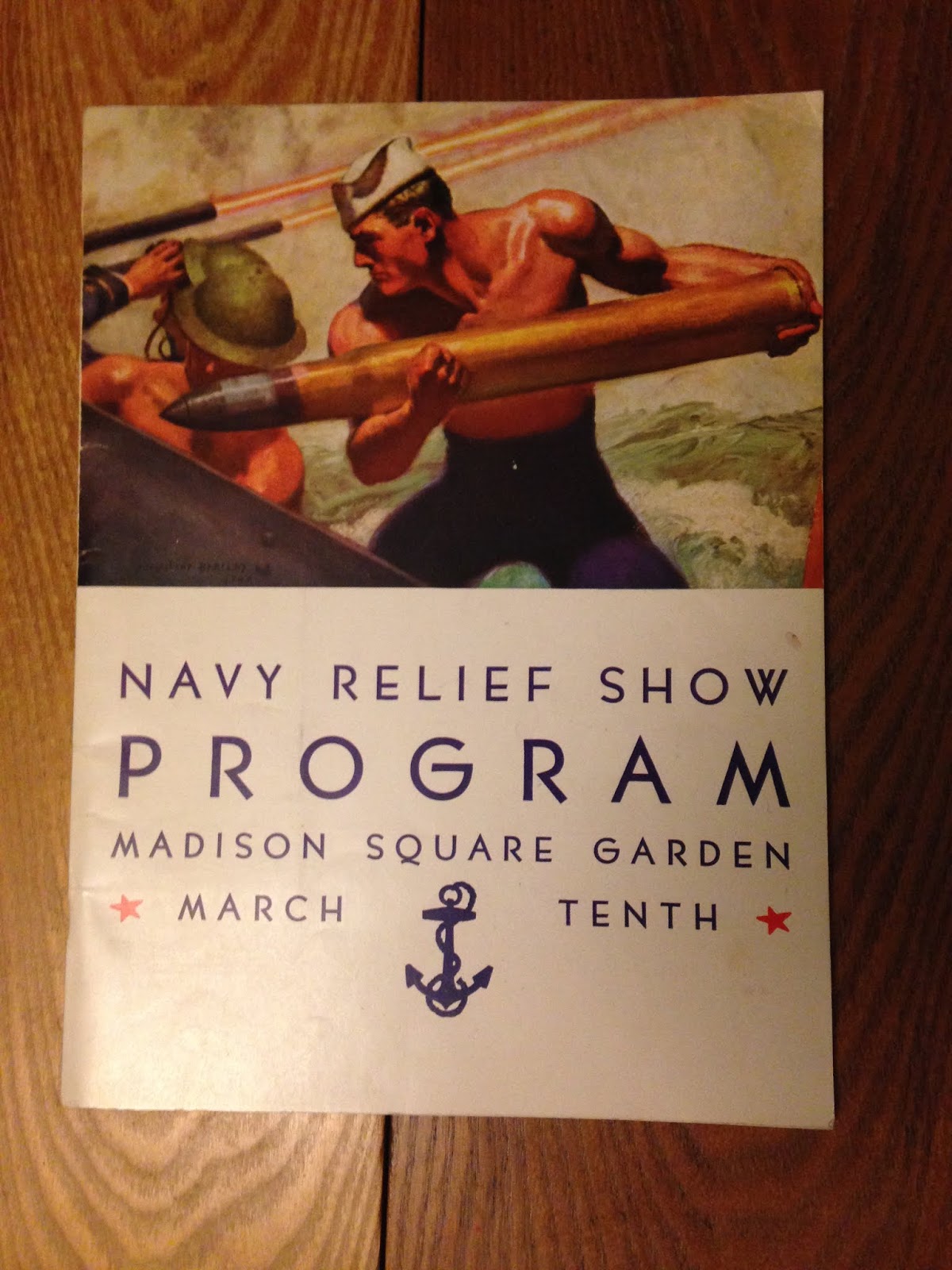
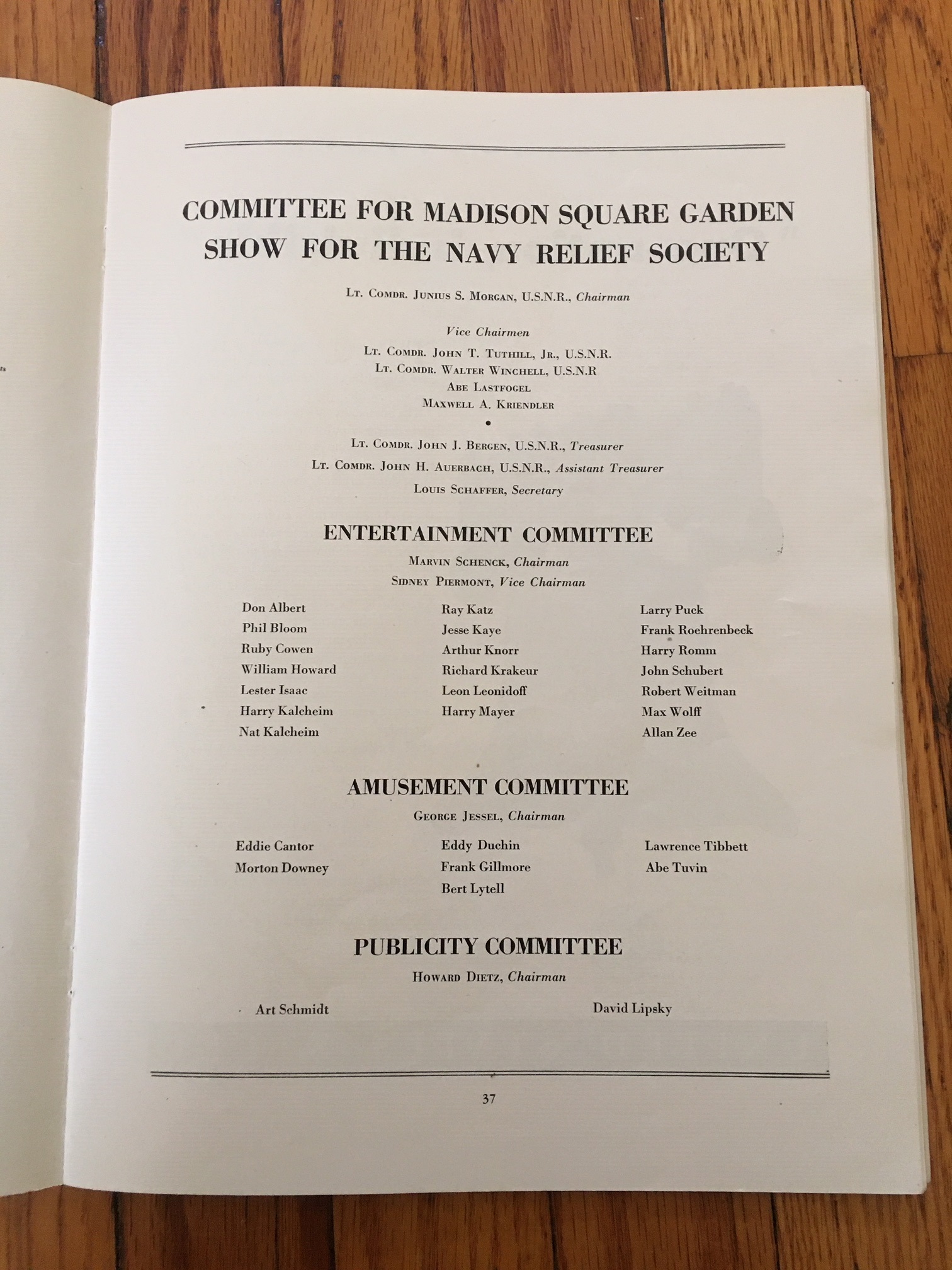
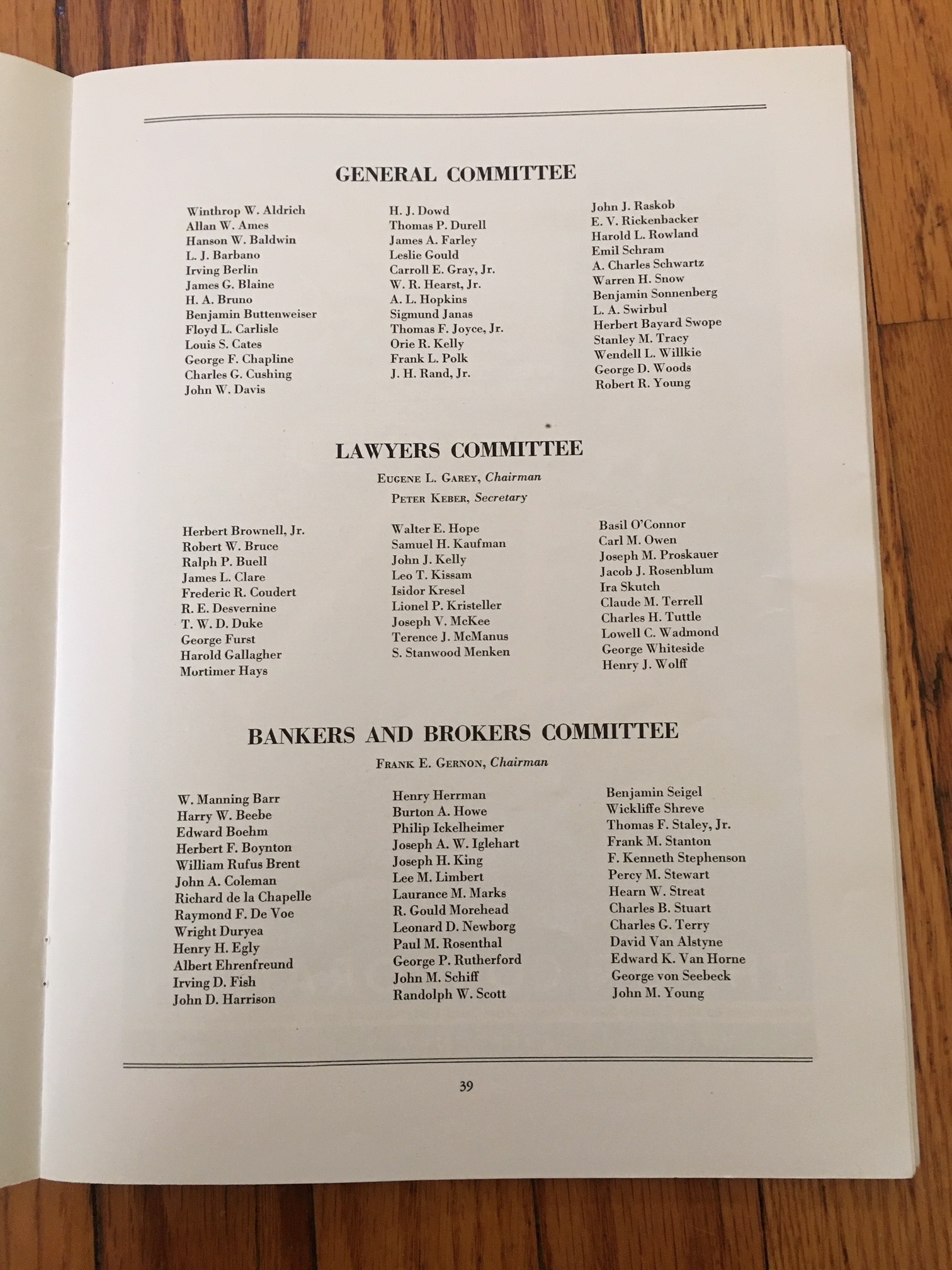
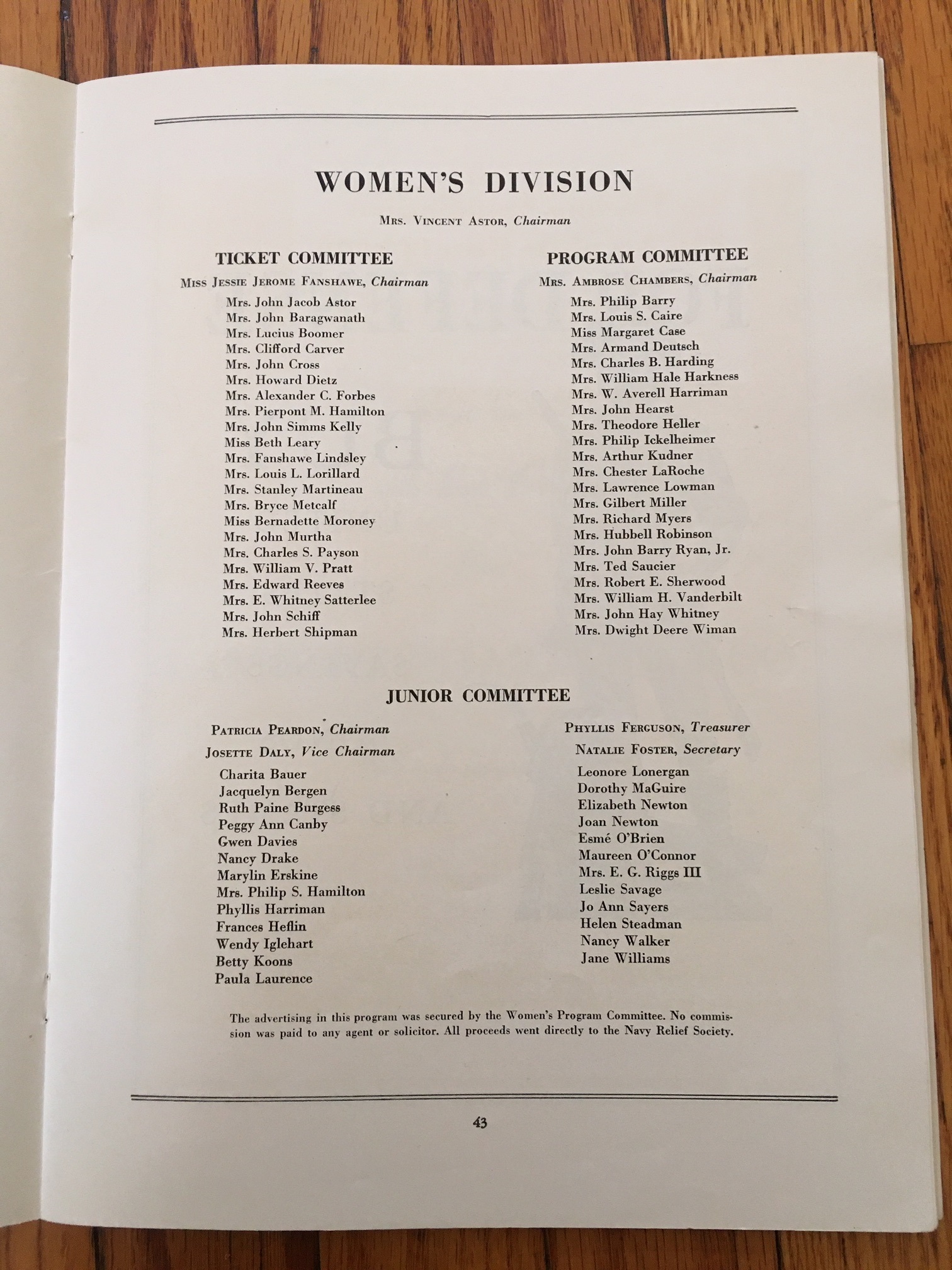
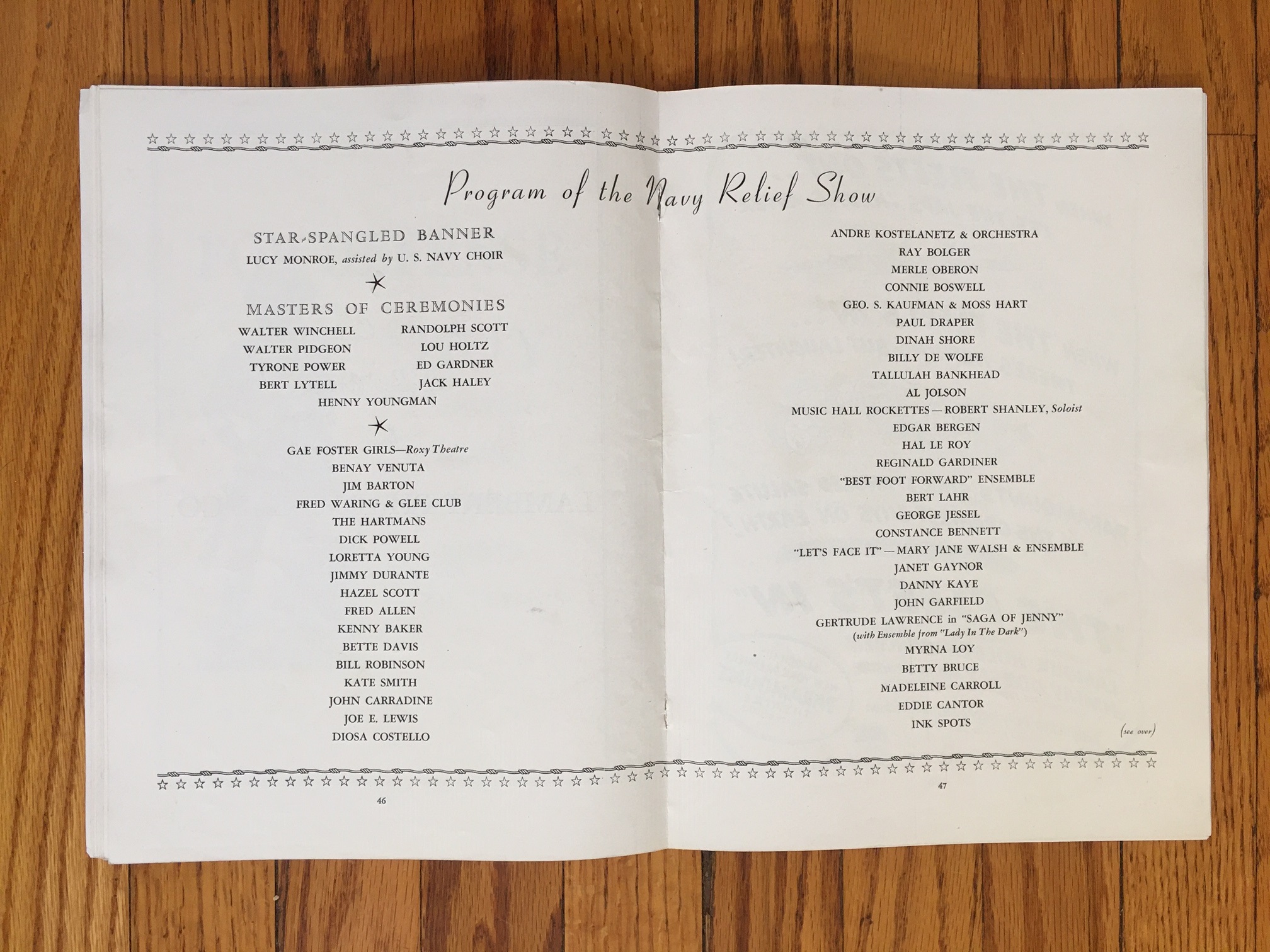
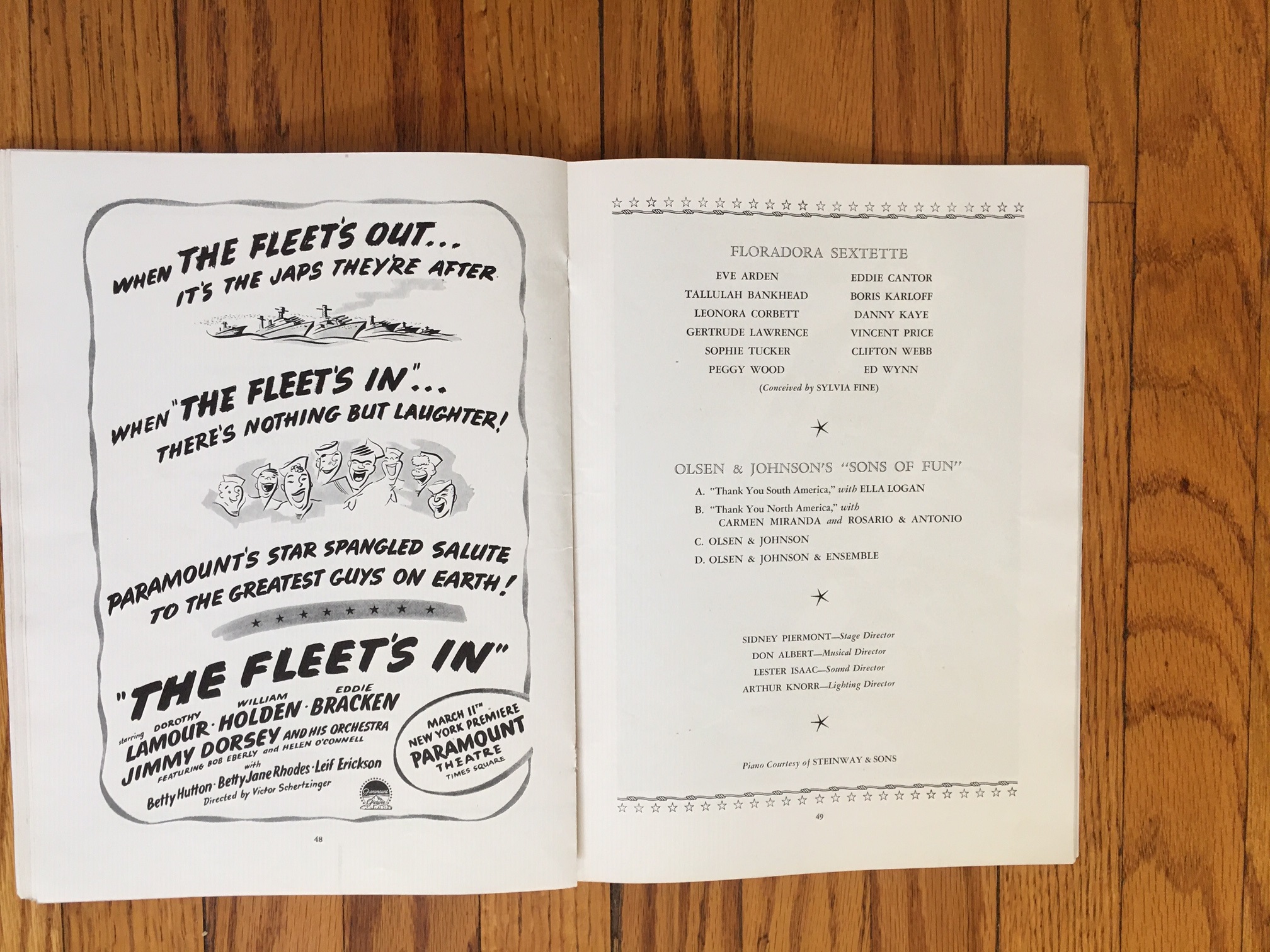
Blog Post No. 3400: The 1942 Navy Relief Show Program

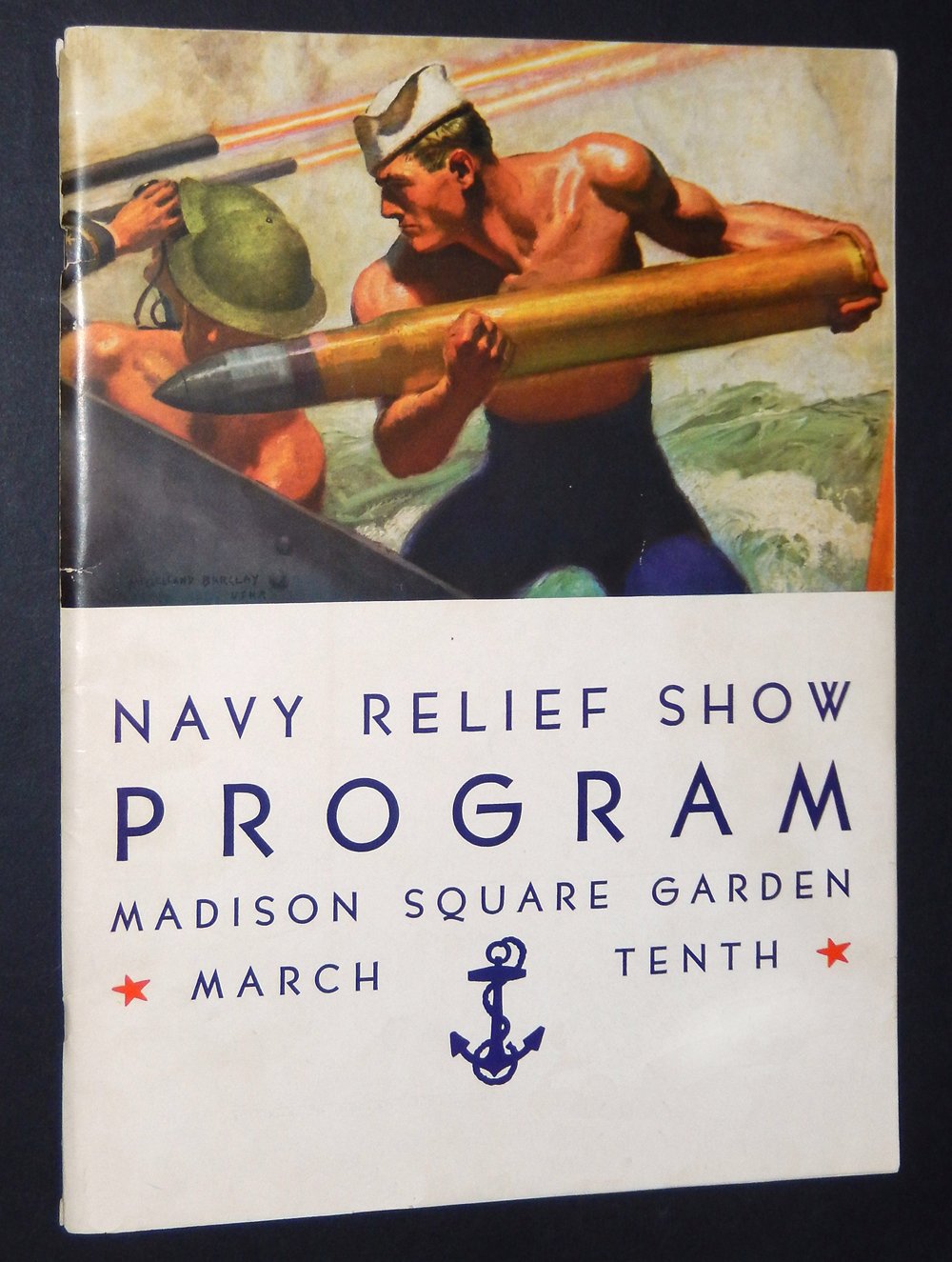
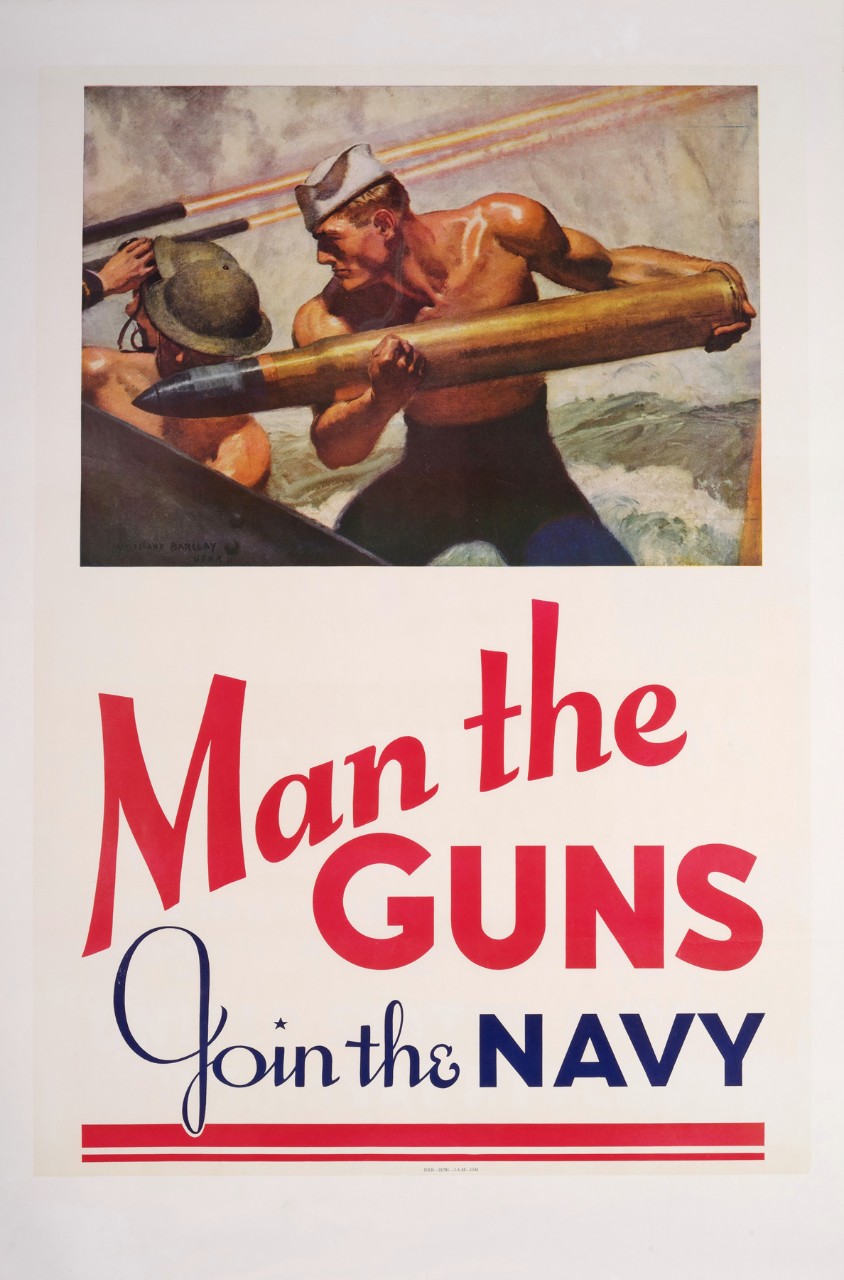
On Tuesday, March 10, 1942, three months after the Japanese attack on Pearl Harbor, the "Navy Relief Show" was staged at Madison Square Garden. Navy illustrator McClelland Barclay created the art for the promotional poster.
https://www.wikiwand.com/en/McClelland_Barclay


The model's hands seem rather diminutive, but the planned entertainment was big.
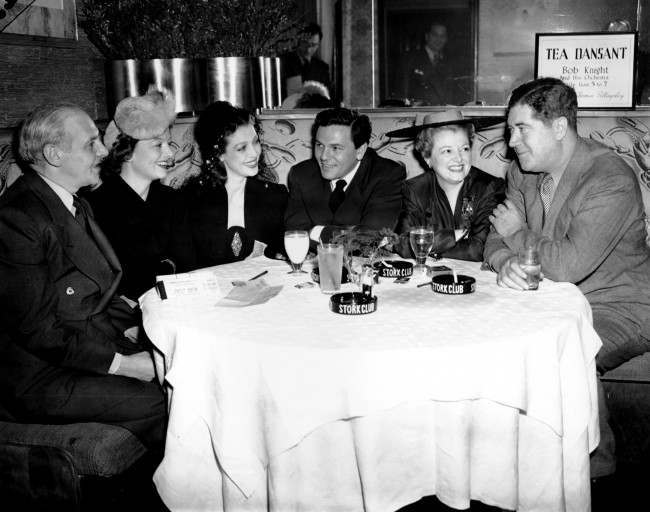
"Writers and movie stars gather at New York’s Stork Club, March 8, 1942, as they prepare for a World War II Navy Relief Show, two days away, at Madison Square Garden. From left are: columnist Walter Winchell, Myrna Loy, Loretta Young, John Garfield, Janet Gaynor and Quentin Reynolds, author and war correspondent." 
(AP Photo/Matty Zimmermann)


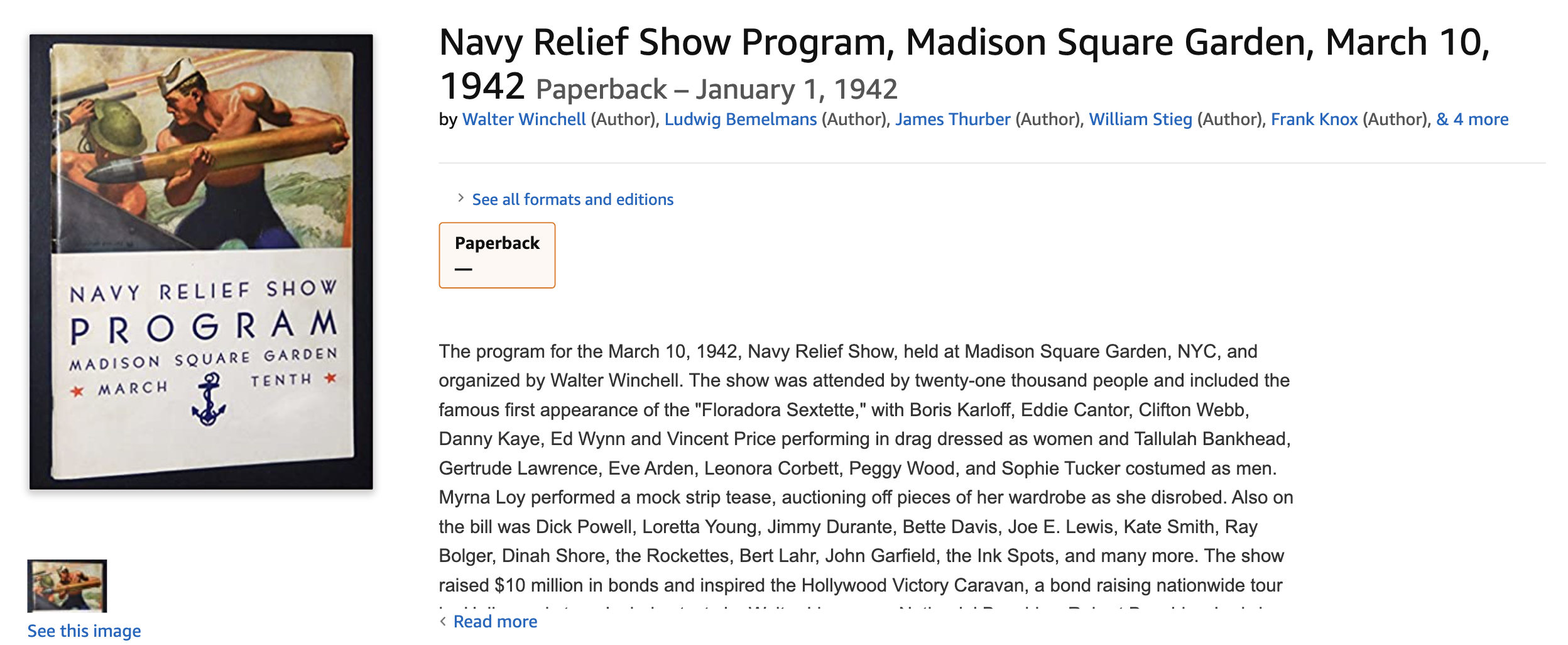
The program from the event, above, remains listed on Amazon although no copies are currently available. The listing's description nevertheless provides a good overview of the entertainment:

https://www.amazon.com/Relief-Program-Madison-Square-Garden/dp/B06X3VJC1N


T
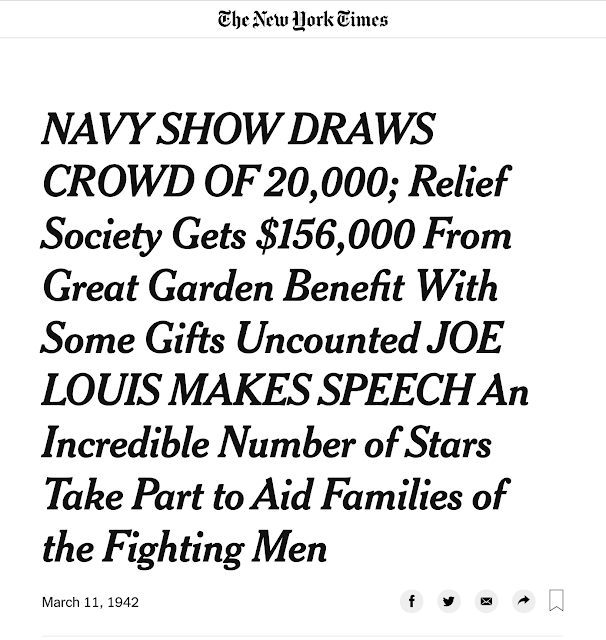
he day after the show, the Times reported on its success:


Fortunately for us, Joel Jacobus, longtime chronicler and cataloguer of Charles Addams
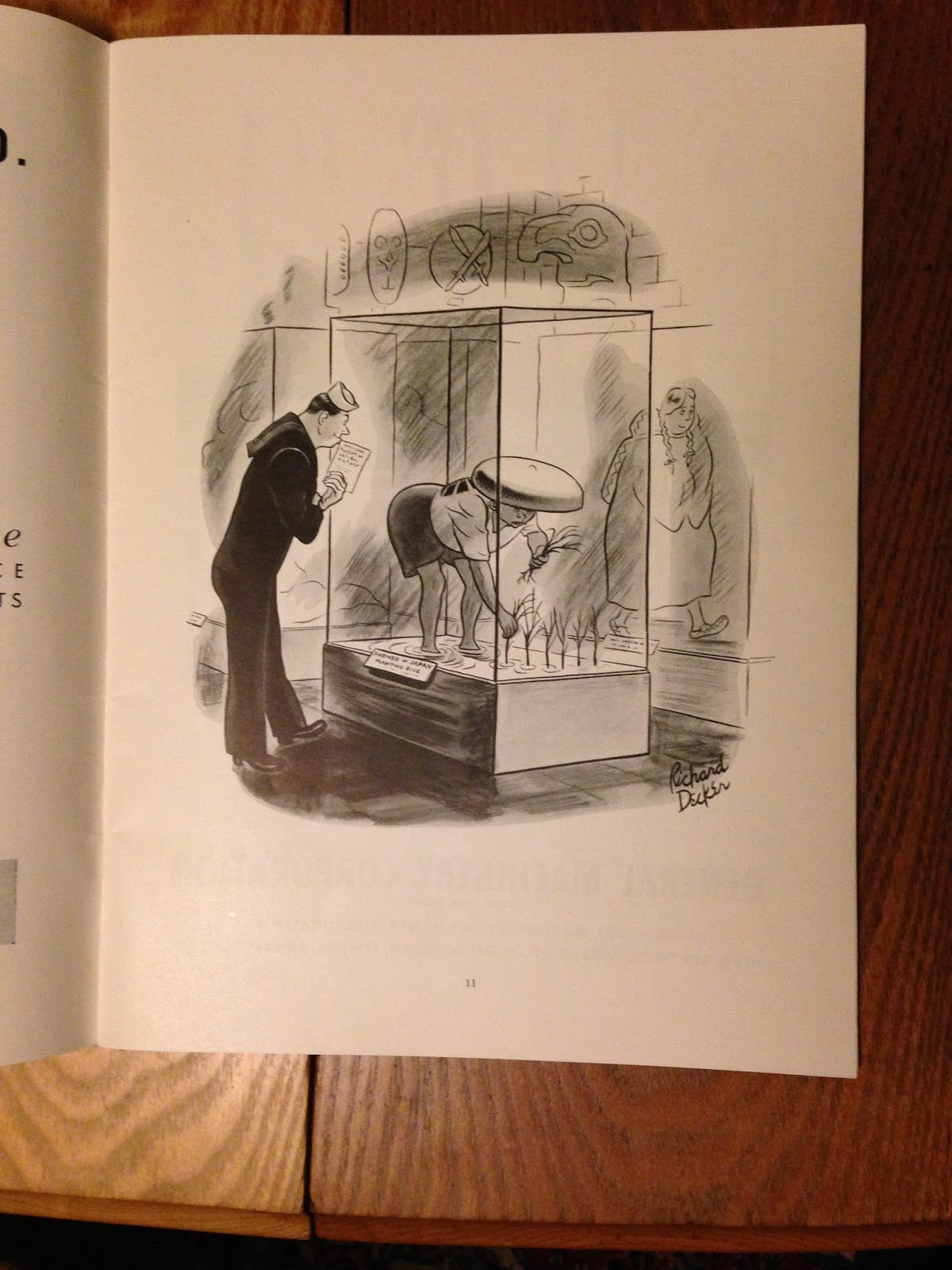
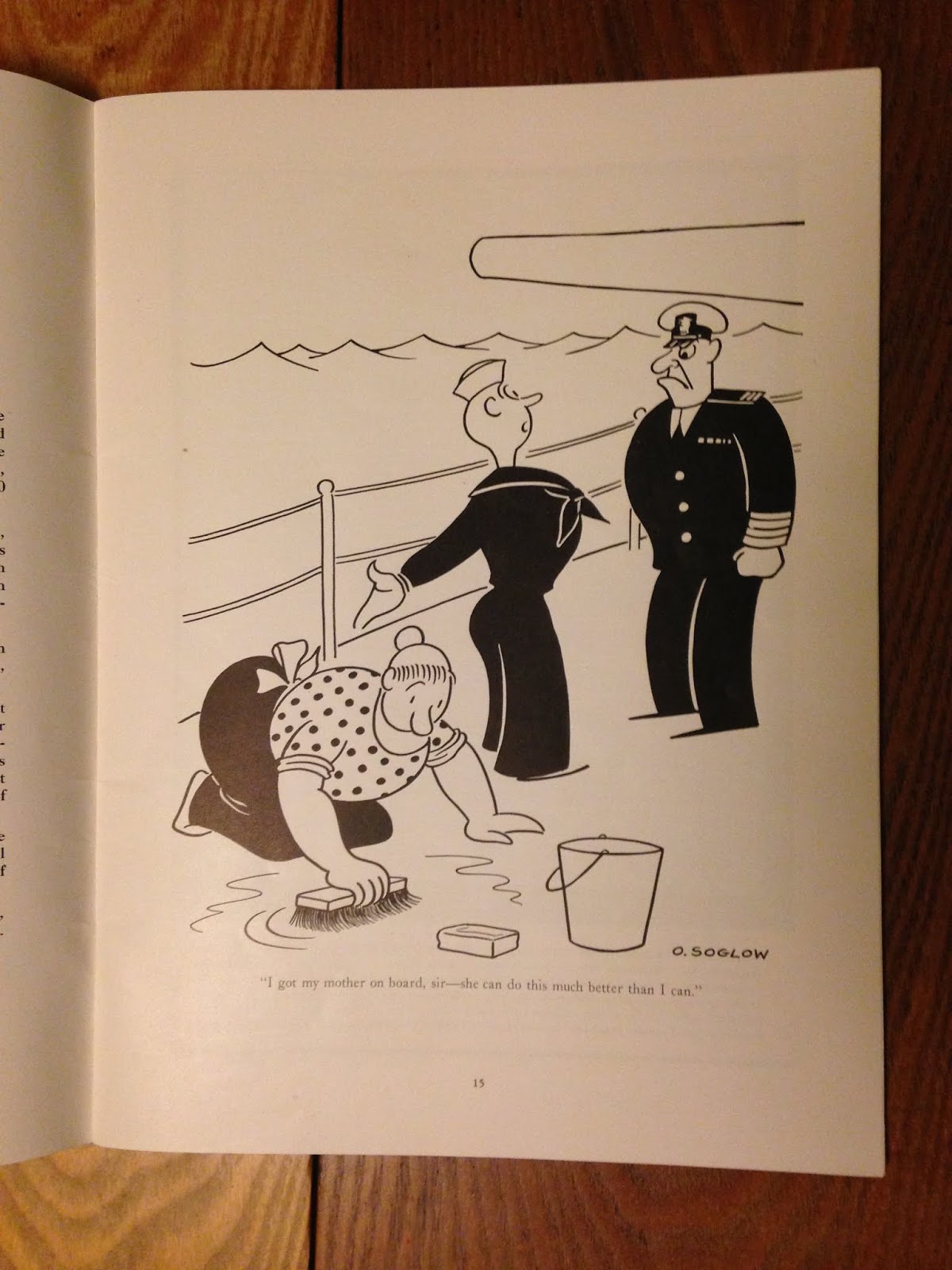
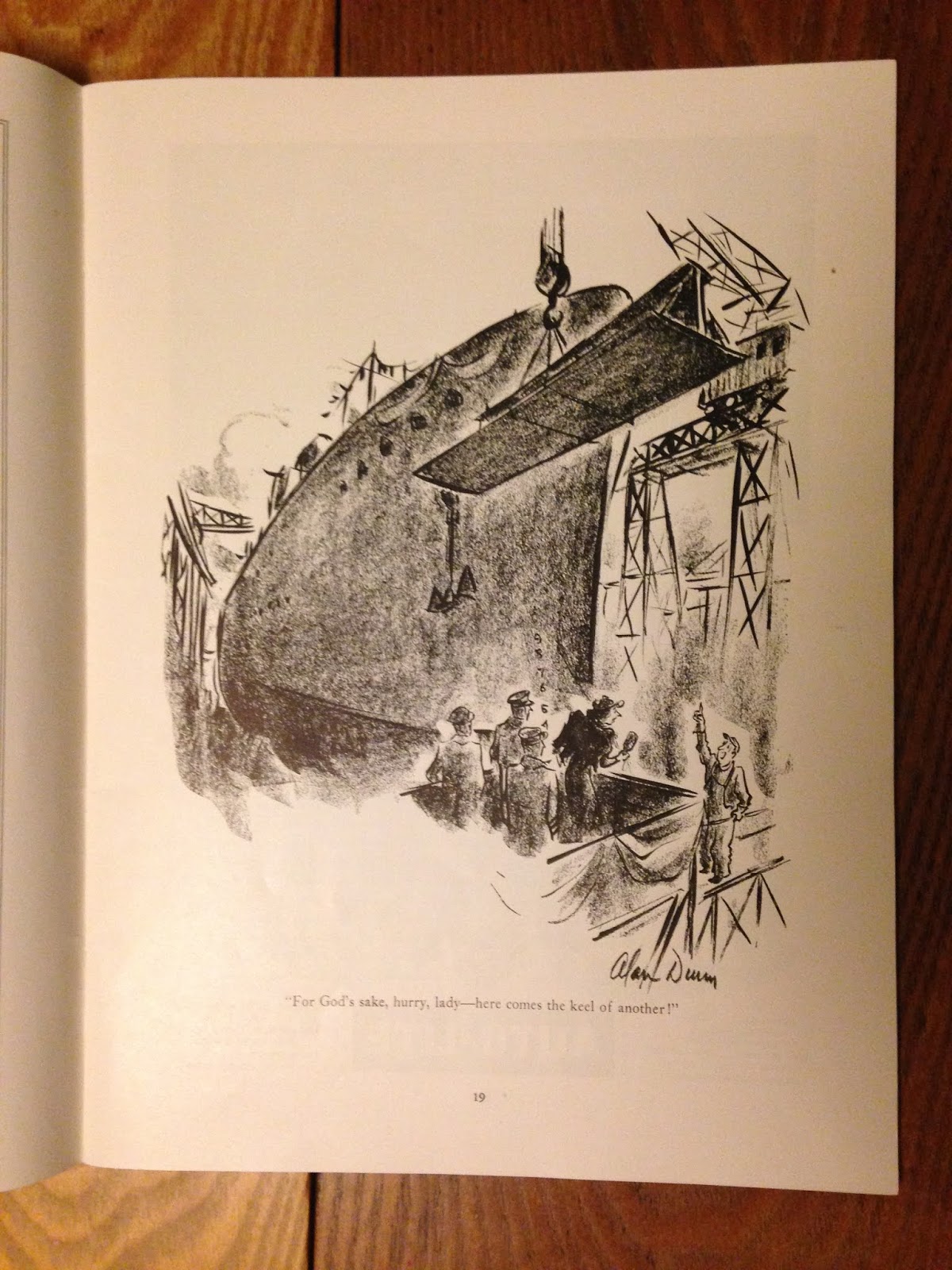
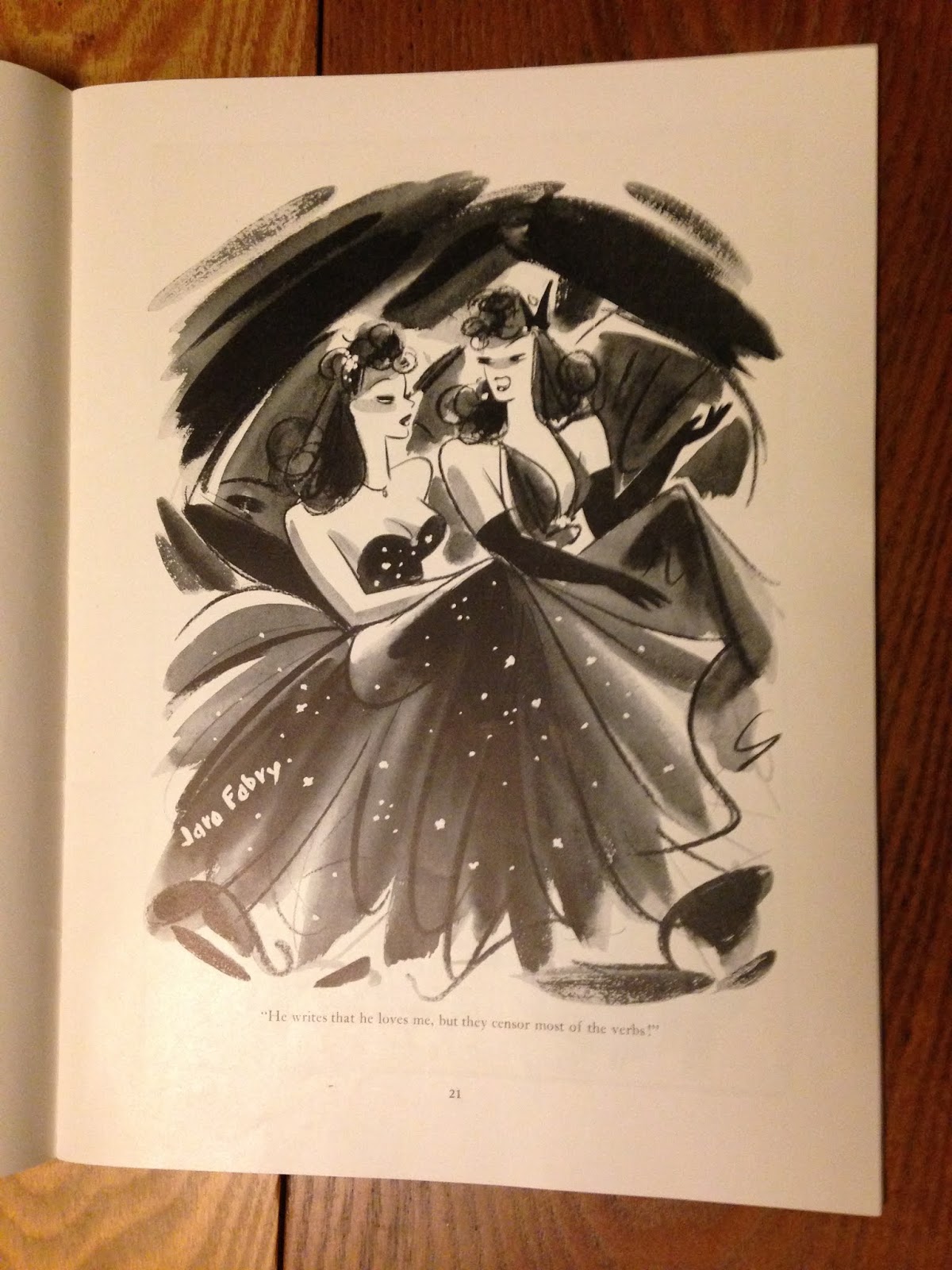
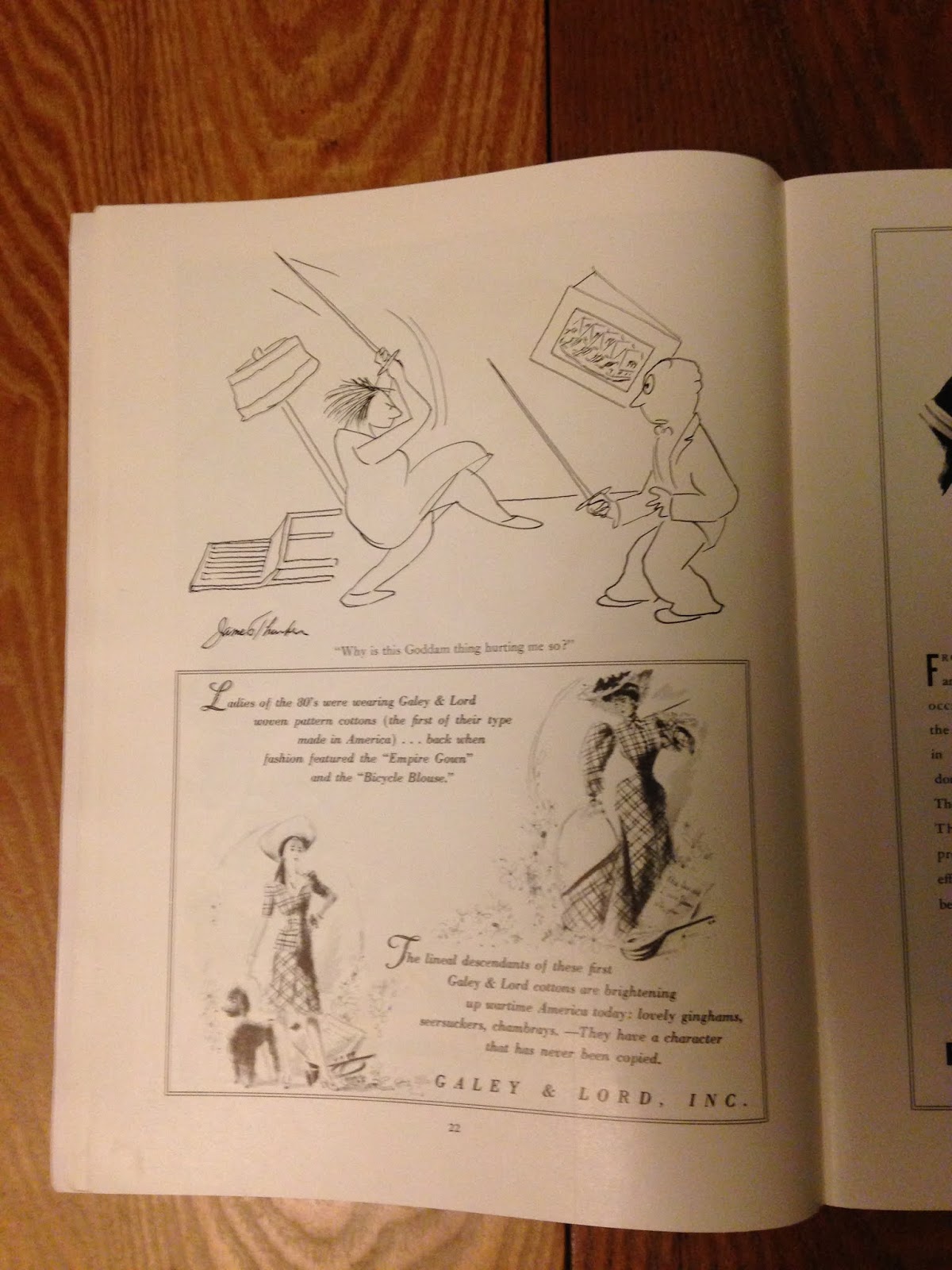
memorabilia, has a copy of the program. Cartoons, many with wartime or maritime themes, are featured throughout the program. One classic is by Addams himself but there is also work by a number of prominent contributors to The New Yorker including Peter Arno, Alan Dunn, and James Thurber. Some of these cartoons were first published in The New Yorker, but many apparently were not. These cartoons may or may not have come from a traveling exhibition "Cartoons Against the Axis" organized by the Art Students League. The Arno cartoon was definitely a part of this exhibition, but has it been published elsewhere? Where I could, I have attempted to document the publication history, if any, of the cartoons.

"The Navy Relief Show" 1942 program:

McClelland Barclay


The program's cover image is Barclay's illustration Sailor Loading Fixed Ammunition (1942). The painting was also used to illustrate a 1942 recruiting poster, below. Barclay, who worked on his art at sea, was lost in 1943 when his warship was hit by a torpedo fired from a Japanese submarine. His body was never recovered.
McClelland Barclay


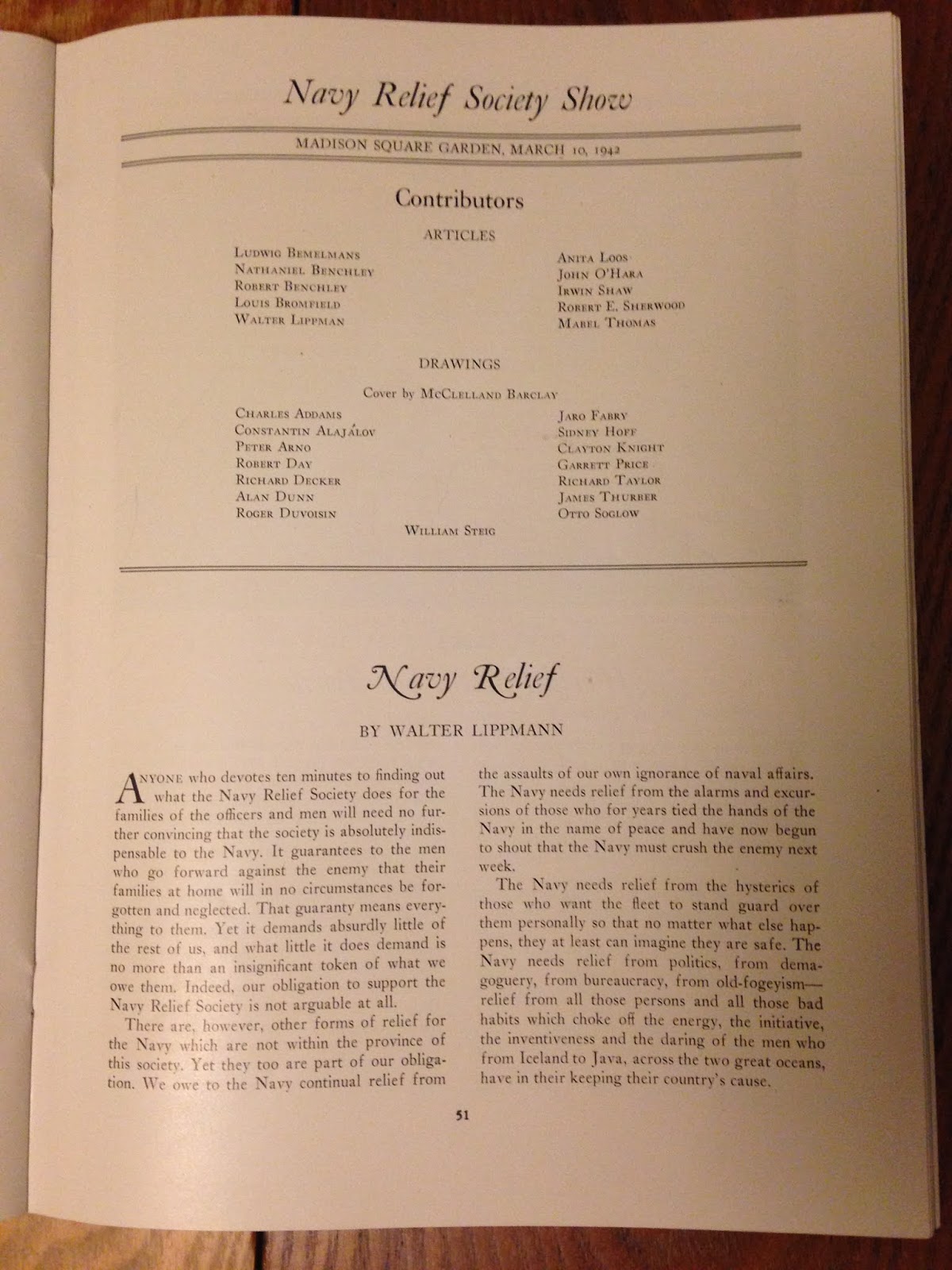
The credits:
"Navy Relief Society Show"
Madison Square Garden, March 10, 1942
Contributors


Among the contributors of drawings, cartoonist Sydney (Syd) Hoff's name is misspelled.


The drawings:

Farmer of Japan Planting Rice
Richard Decker

"I got my mother on board, sir—she can do this much better than I can."
Otto Soglow


"For God's sake, hurry, lady—here comes the keel of another!"
Alan Dunn


"He writes that he loves me, but they censor most of the verbs!"
Jaro Fabry


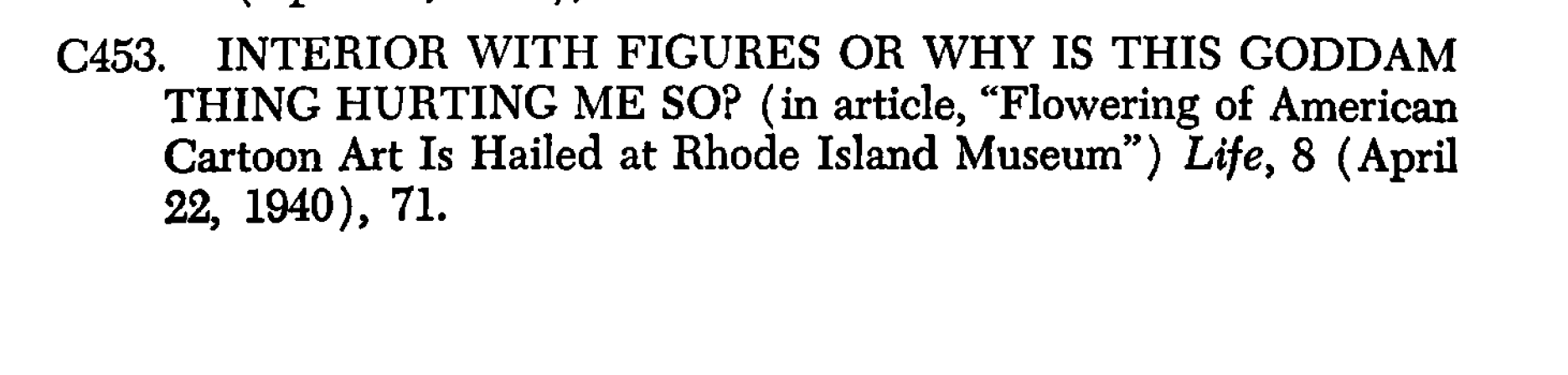
"Why is this Goddam thing hurting me so?"
James Thurber


This may have been this Thurber cartoon's second appearance in print. Bowden lists a drawing with the same caption published in Life magazine in 1940, but does not note it being here.
Bowden, Edwin T. James Thurber:  A Bibliography. Ohio State University Press, 1968, p. 190


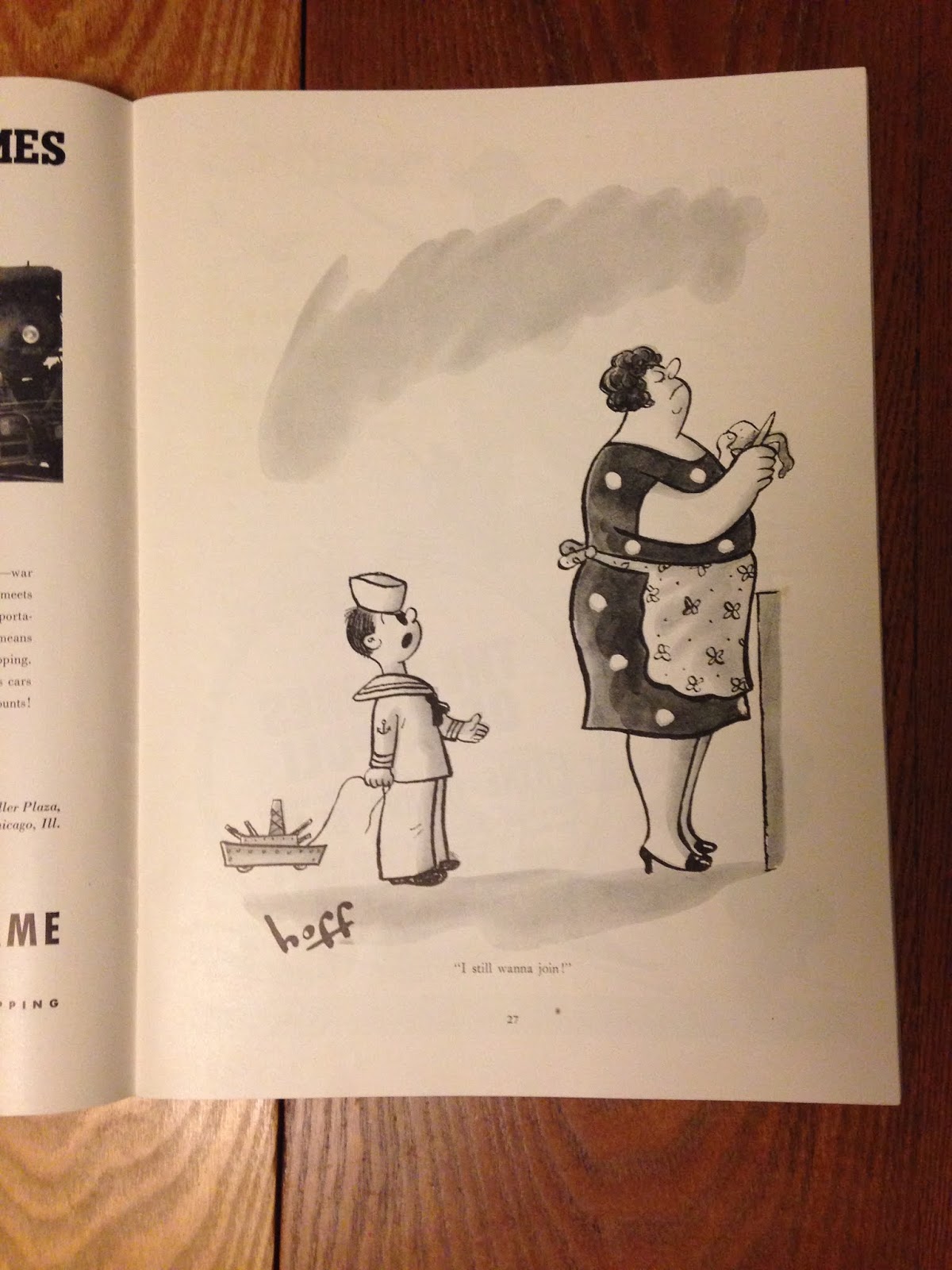
"I still wanna join!"
Syd Hoff


Alan Dunn


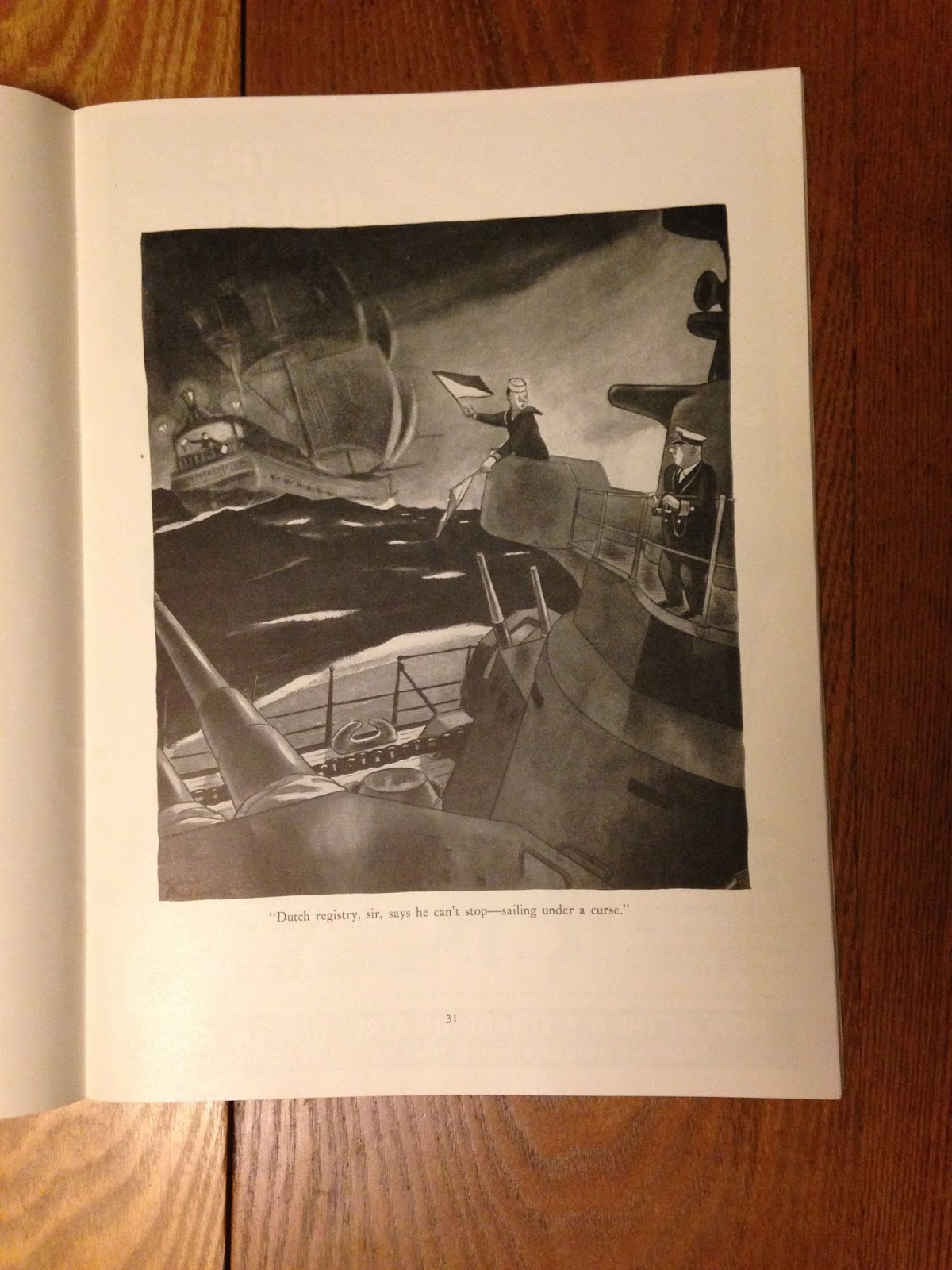
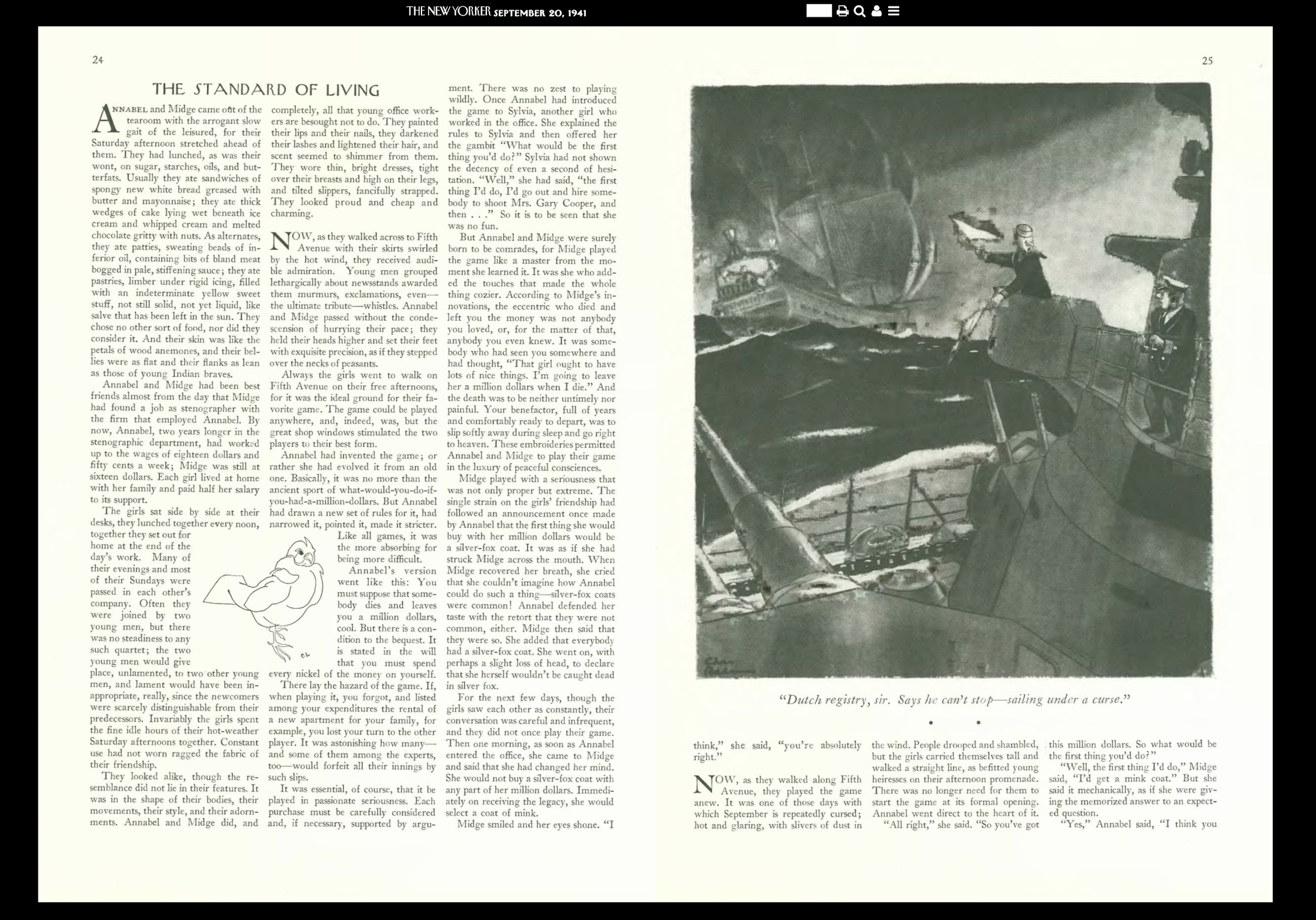
"Dutch registry, sir, says he can't stop—sailing under a curse."
Charles Addams
First published in The New Yorker, September 20, 1941, page 25


The New Yorker caption has a period after sir, which seems preferable.
https://archives.newyorker.com/newyorker/1941-09-20/flipbook/024/


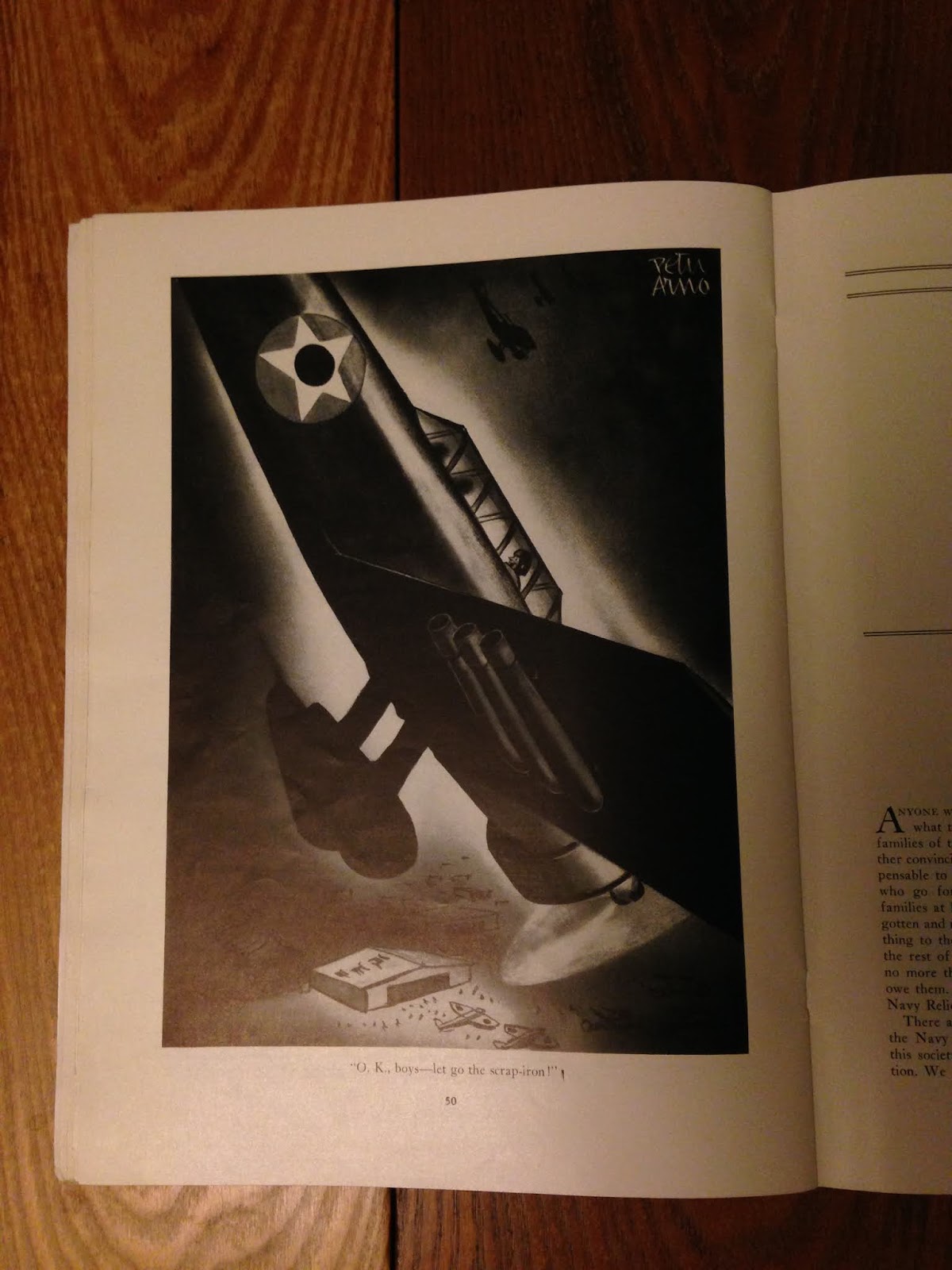
"O. K., boys—let go the scrap-iron!"
Peter Arno

Exhibited "Cartoons Against the Axis," The Art Students League, February 17, 1942. The show traveled nationally including the Metropolitan Museum of Art.
Collection of the 8 Henderson Place Foundation


Clayton Knight

Alan Dunn


Alan Dunn


Alan Dunn


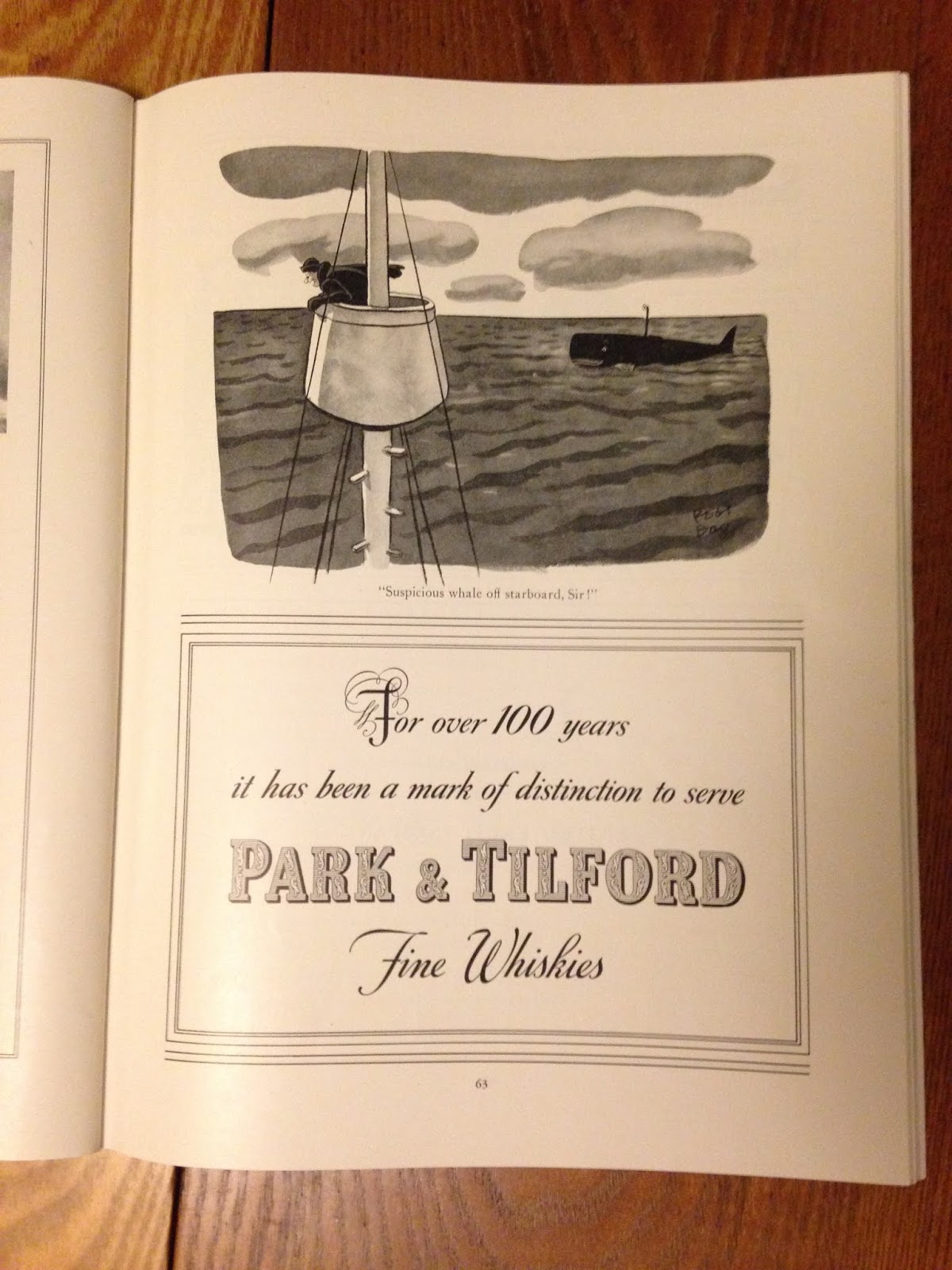
"Suspicious whale off starboard, Sir!"
Robert Day


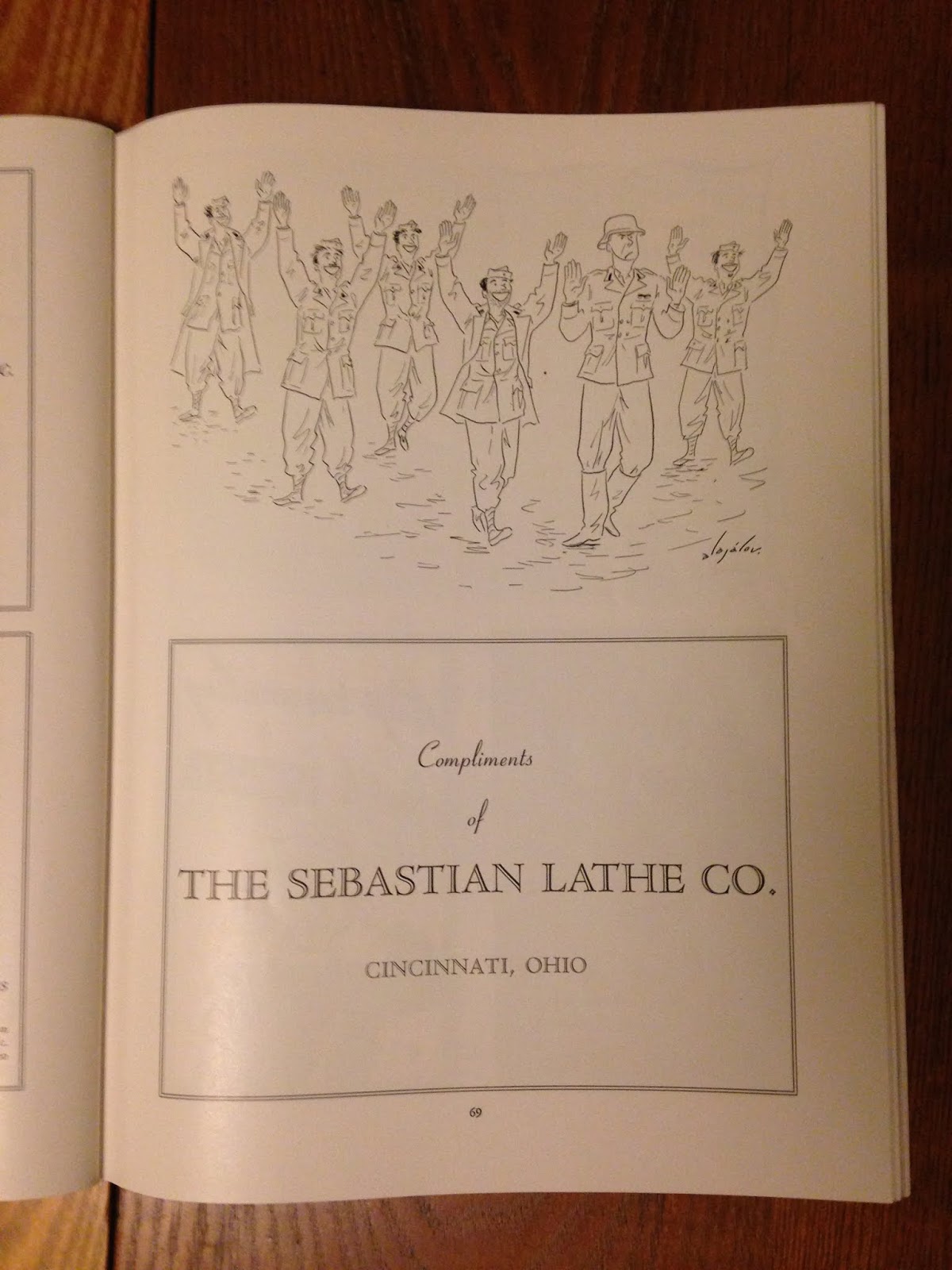
Constantin Alajálov
First published in The New Yorker, January 31, 1942, page 9


https://archives.newyorker.com/newyorker/1942-01-31/flipbook/008/


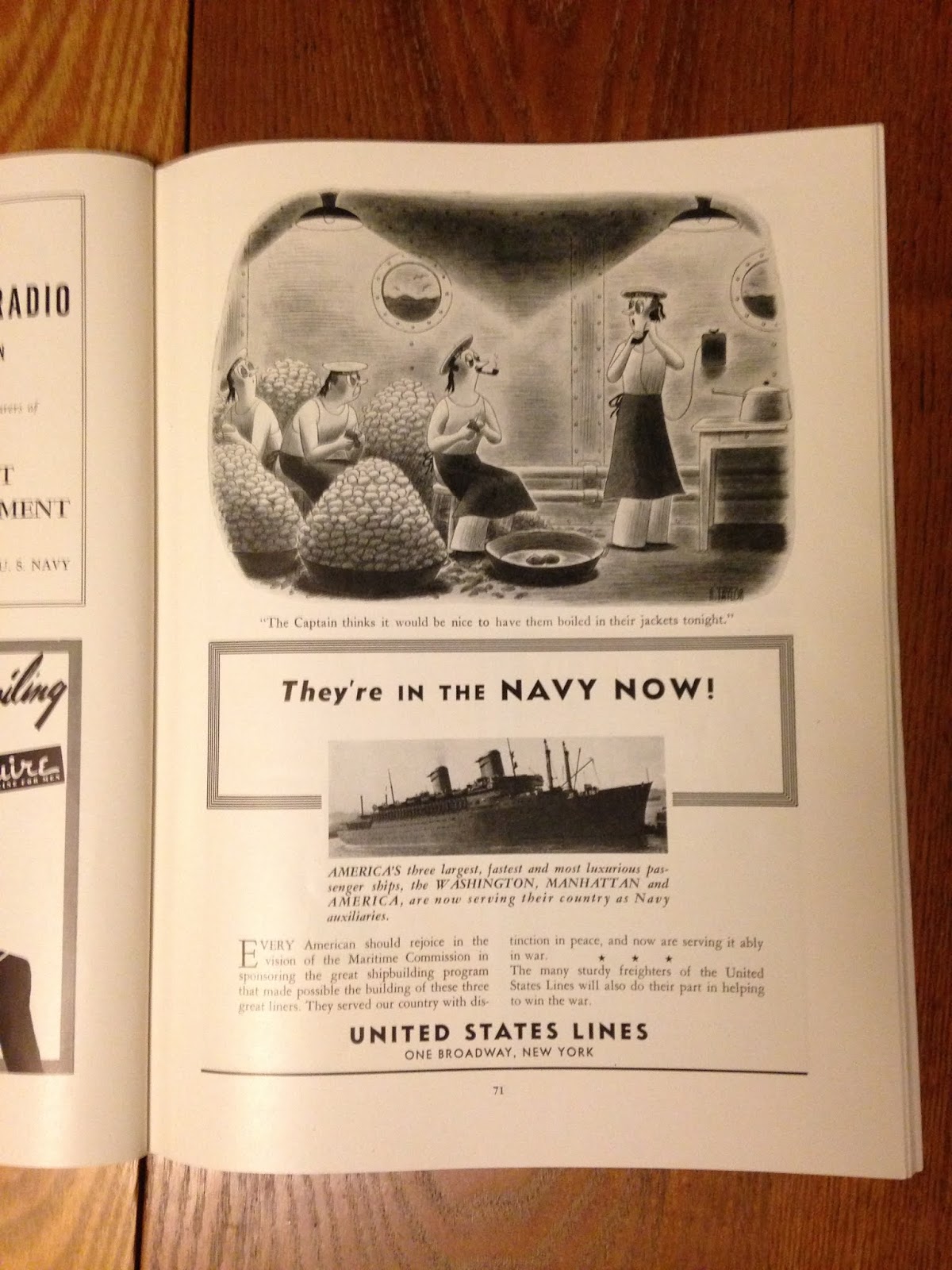
"The Captain thinks it would be nice to have them boiled in their jackets tonight."
Richard Taylor
First published in The New Yorker, February 24, 1940, page 21


https://archives.newyorker.com/newyorker/1940-02-24/flipbook/020/


Bakery
Roger Duvoisin


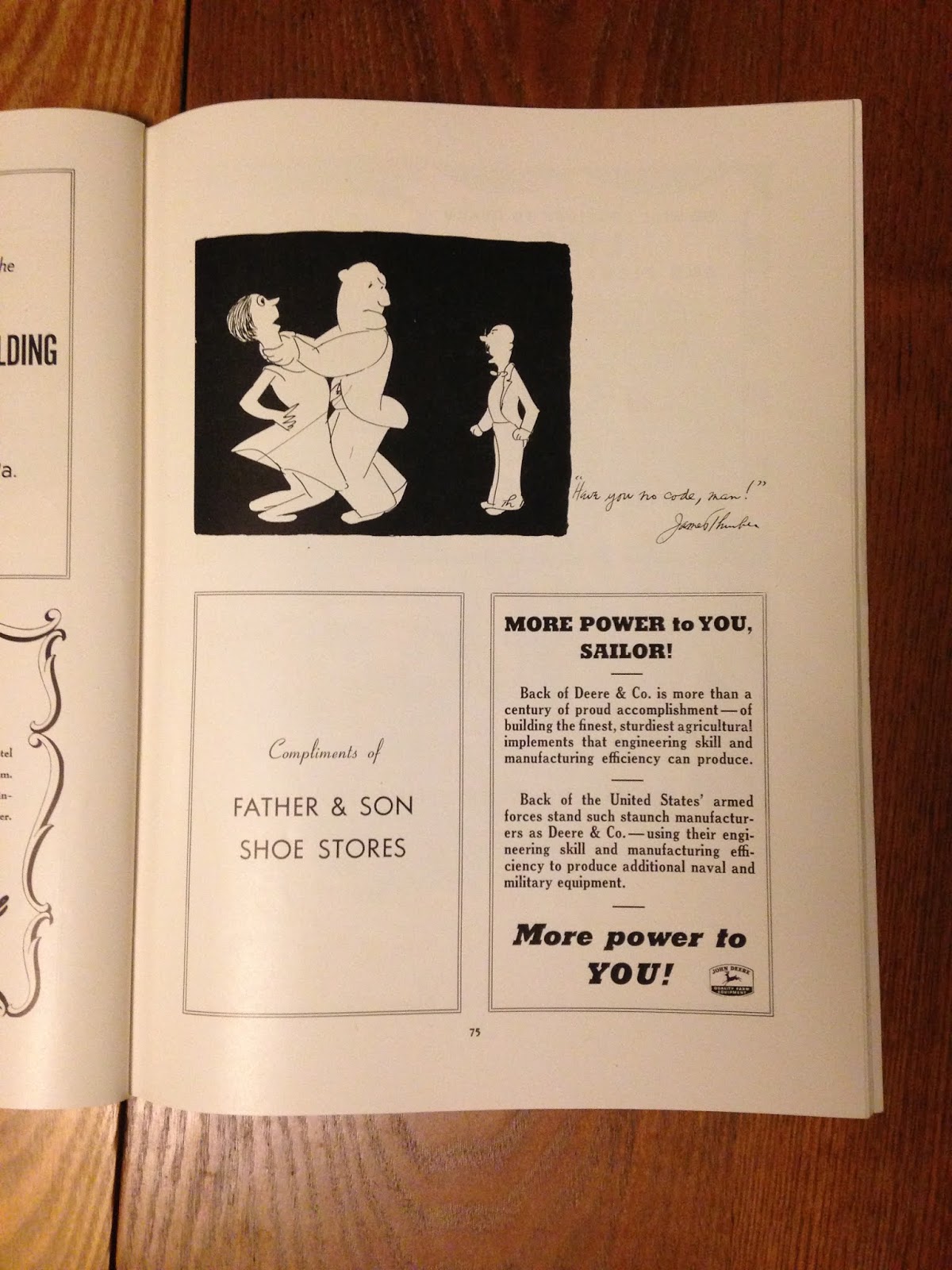
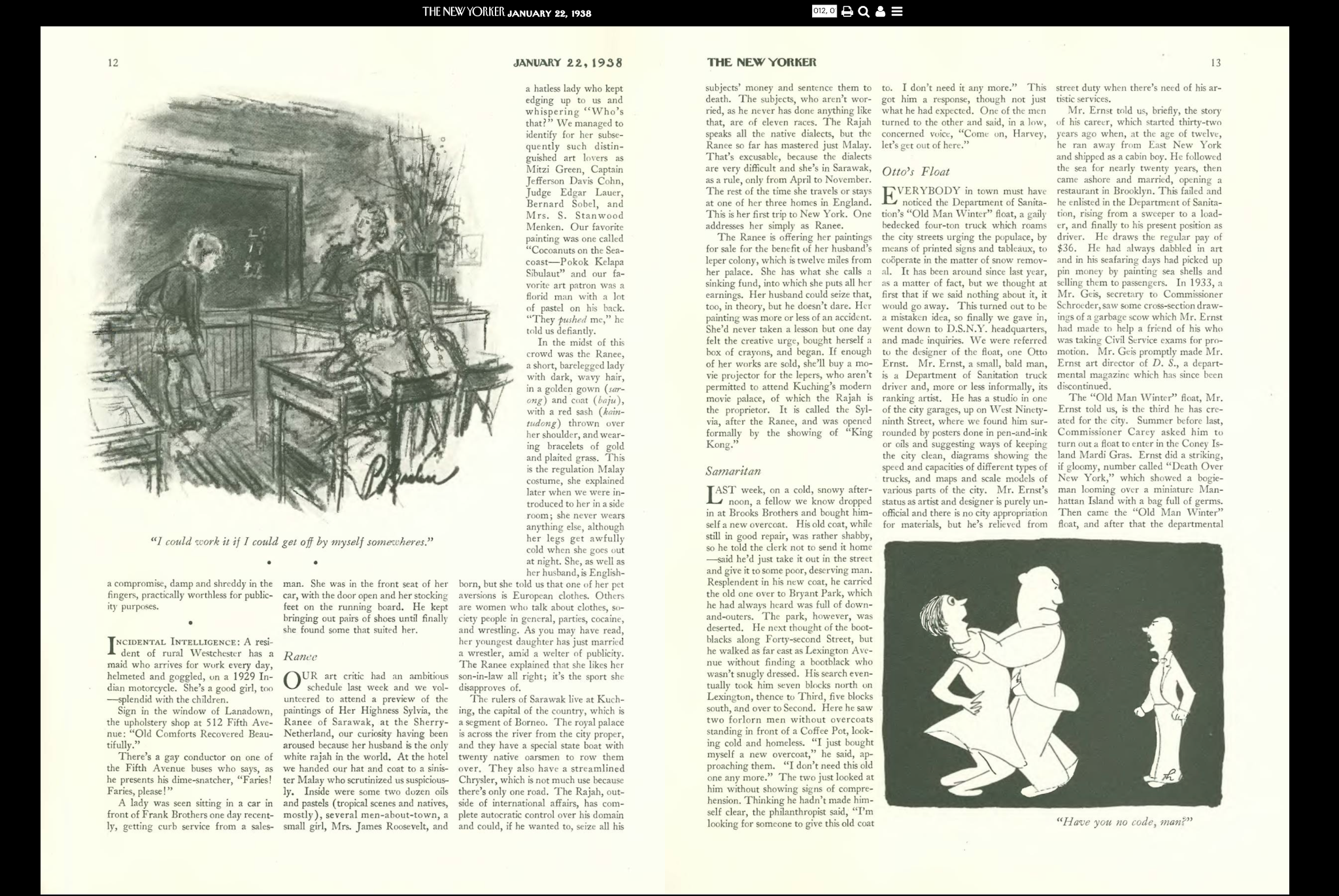
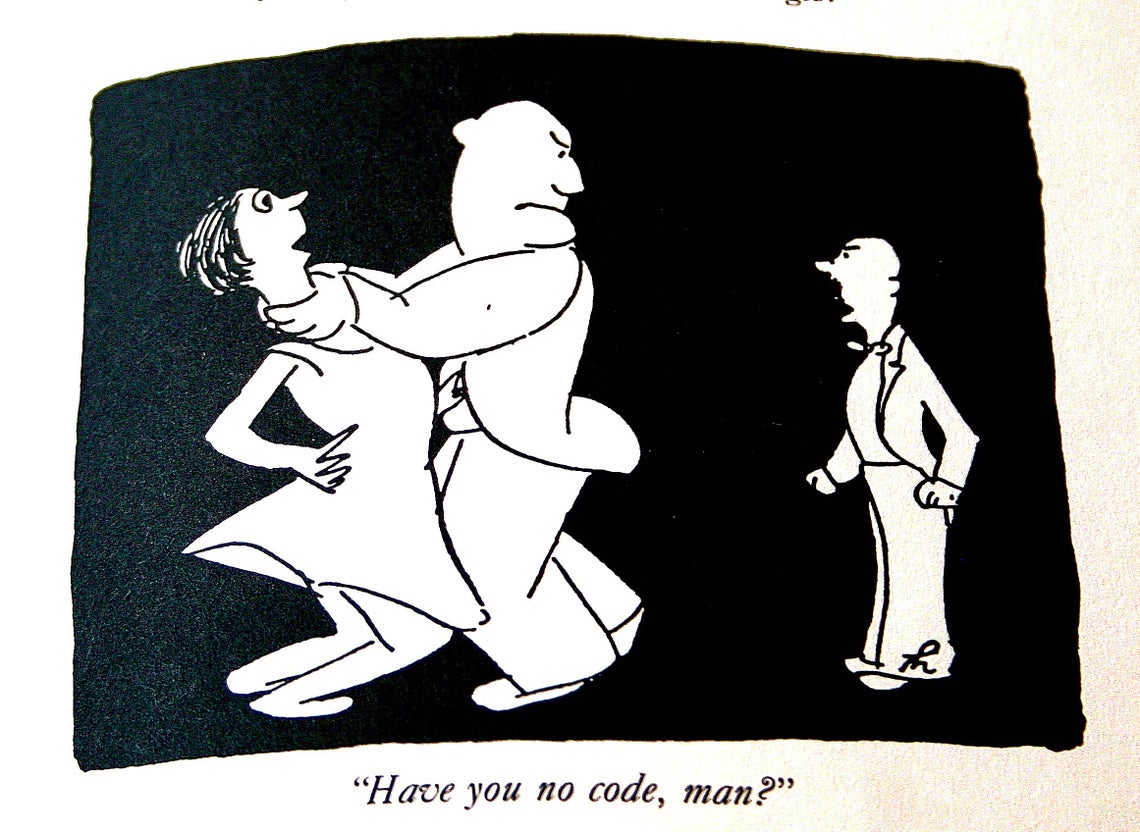
"Have you no code, man!"
James Thurber
First published in The New Yorker, January 22, 1938, page 13


This cartoon was originally published in The
New Yorker in 1938 not with an exclamation point but with a question mark, which is correct, of course. Still, it's interesting that the exclamation point in the Navy Relief Show program is printed in Thurber's own hand.
https://archives.newyorker.com/newyorker/1938-01-22/flipbook/012/


Thurber's cartoon was later collected in Men, Women and Dogs (1943) and posthumously included in Vintage Thurber (1963) and Thurber & Company (1966), as well as Thurber on Crime (1991).
https://www.etsy.com/hk-en/listing/531412531/thurber-on-crime-by-james-thurber-edited


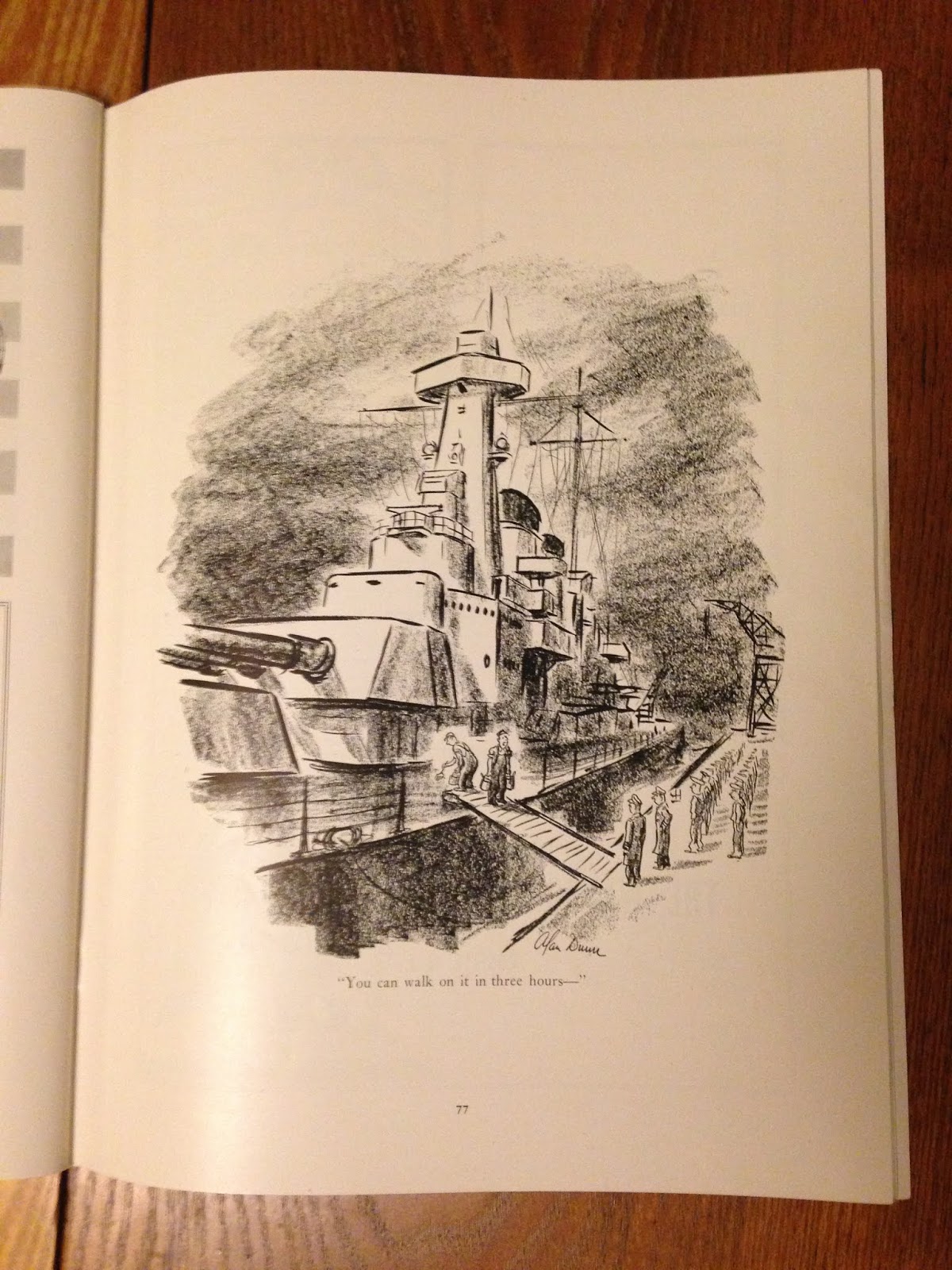
"You can walk on it in three hours—"
Alan Dunn


Garrett Price


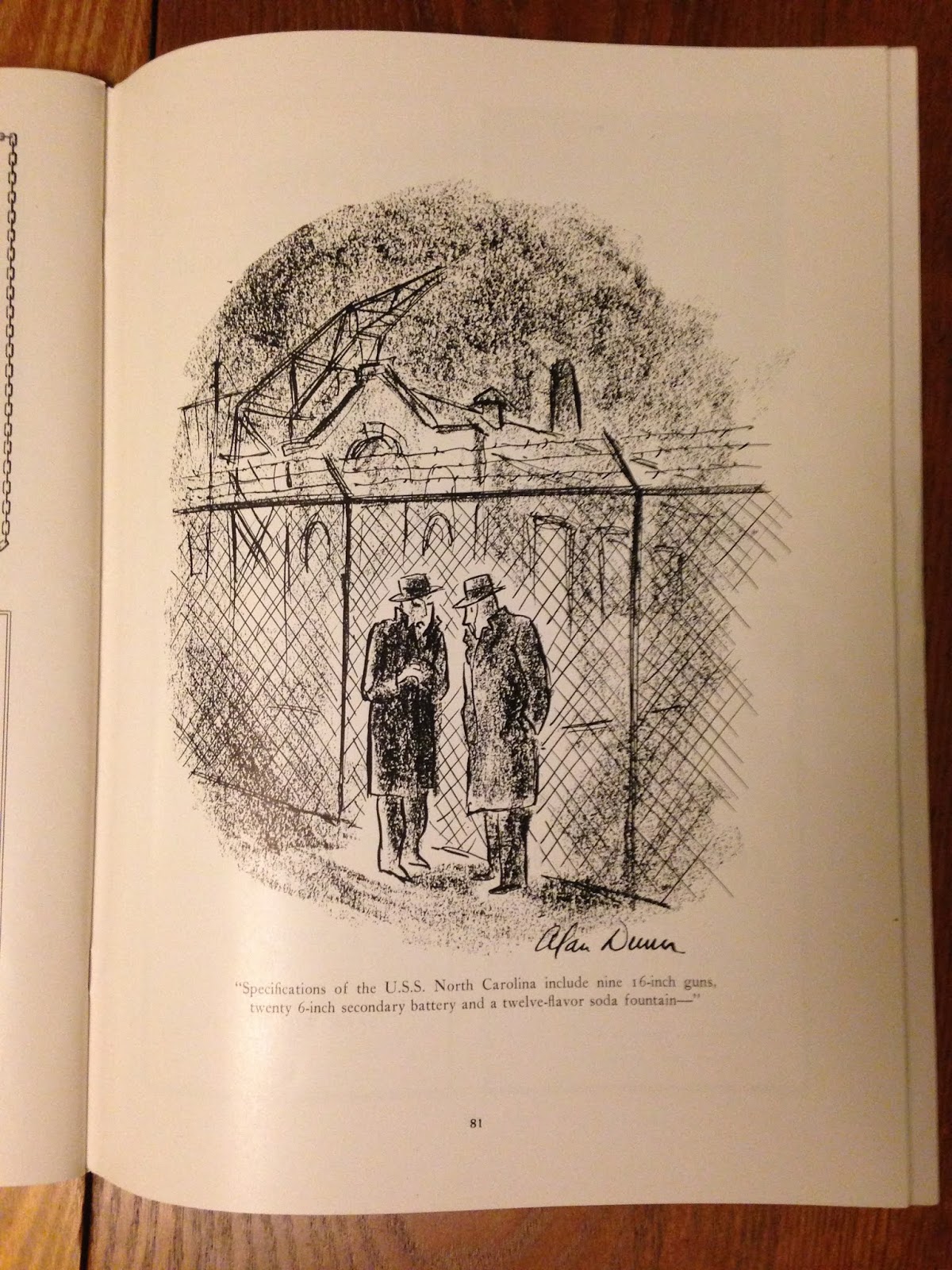
"Specifications of the U.S.S. North Carolina include nine 16-inch guns, twenty 6-inch secondary battery and a twelve-flavor soda fountain—"
Alan Dunn


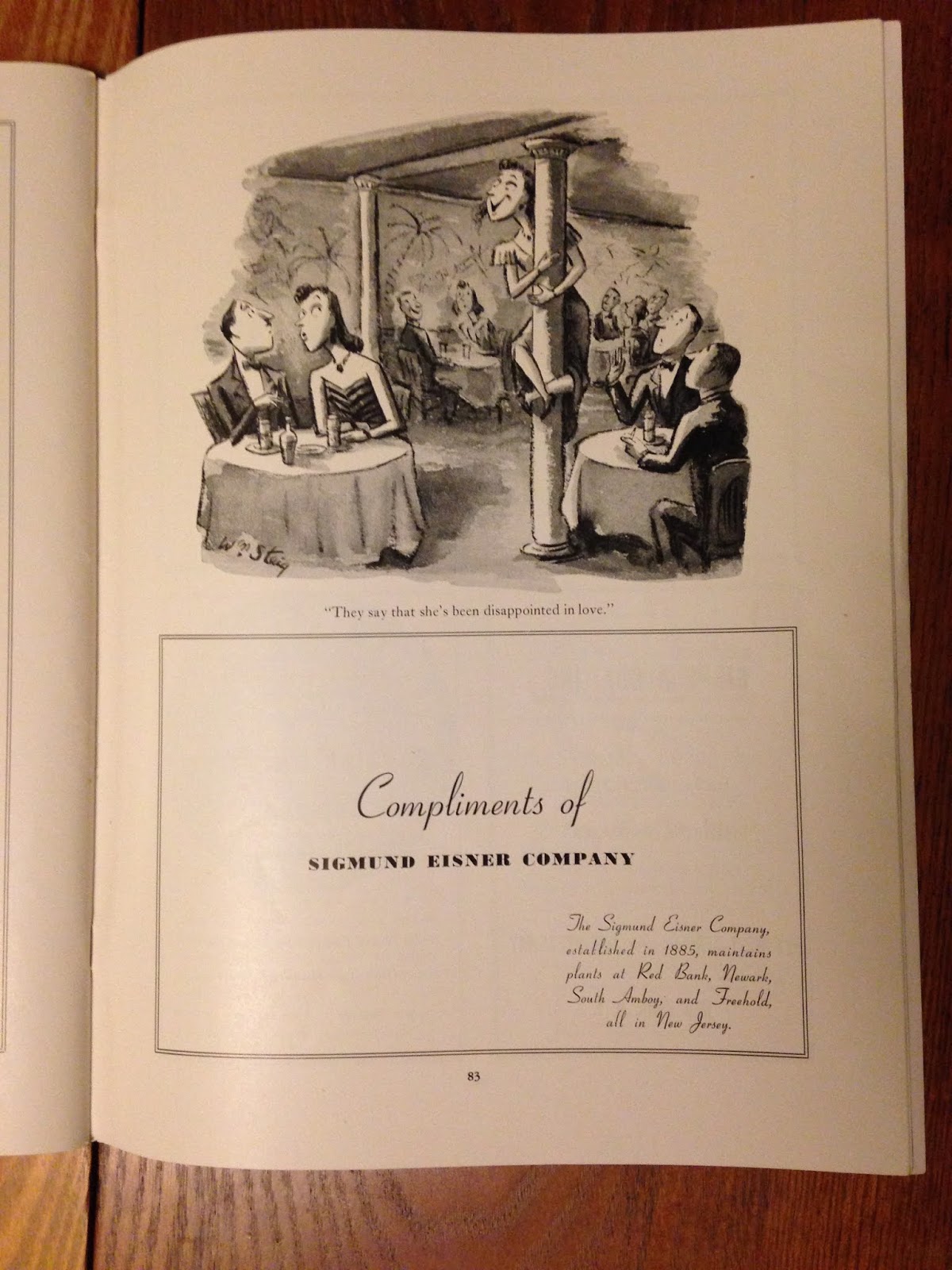
"They say that she's been disappointed in love."
William Steig


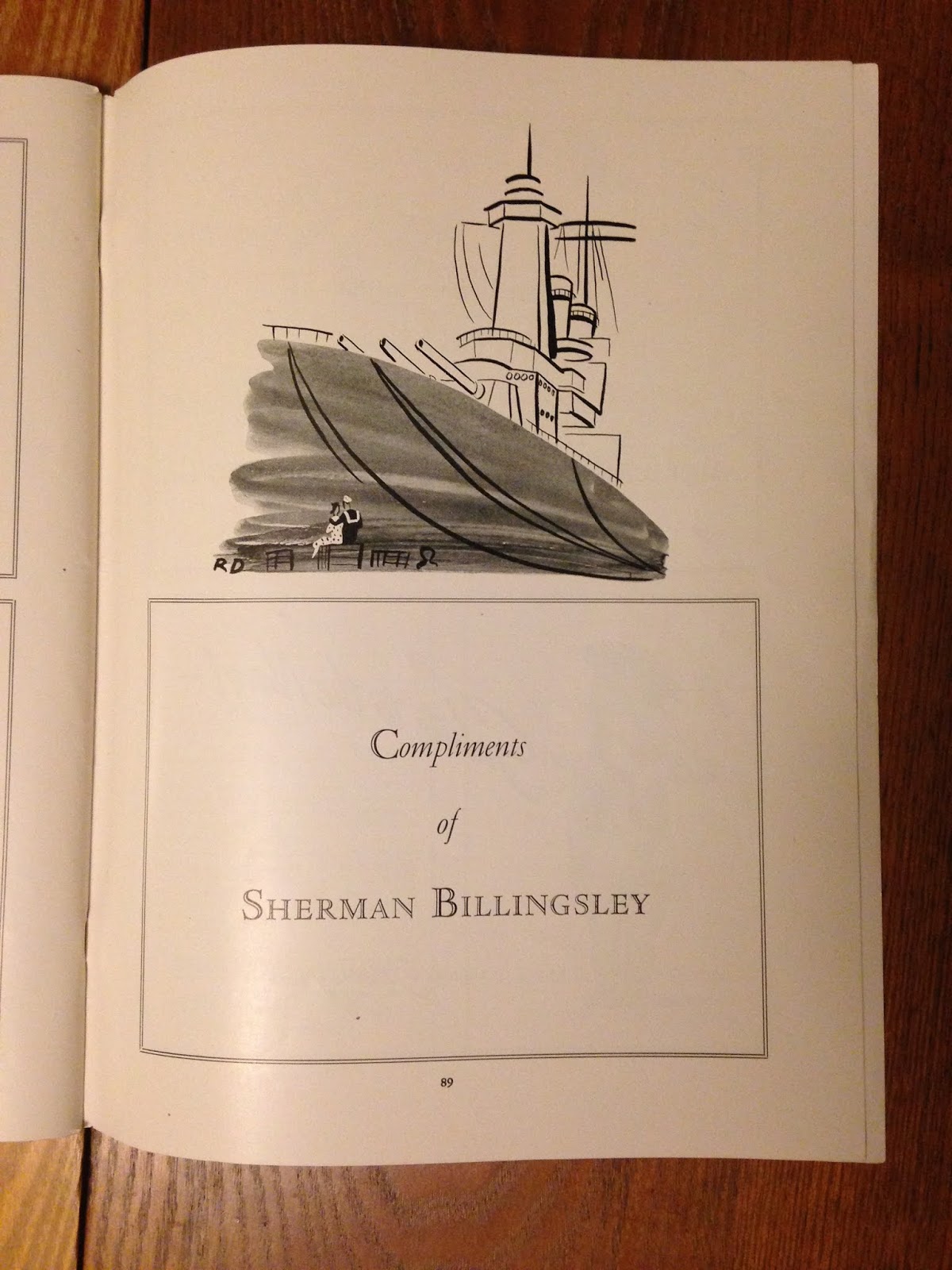
Roger Duvoisin


Roger Duvoisin has drawn a battleship rigged with two radio masts just as Alan Dunn did on page 77 of the program. Could they both have drawn the same ship while it was berthed in New York harbor?

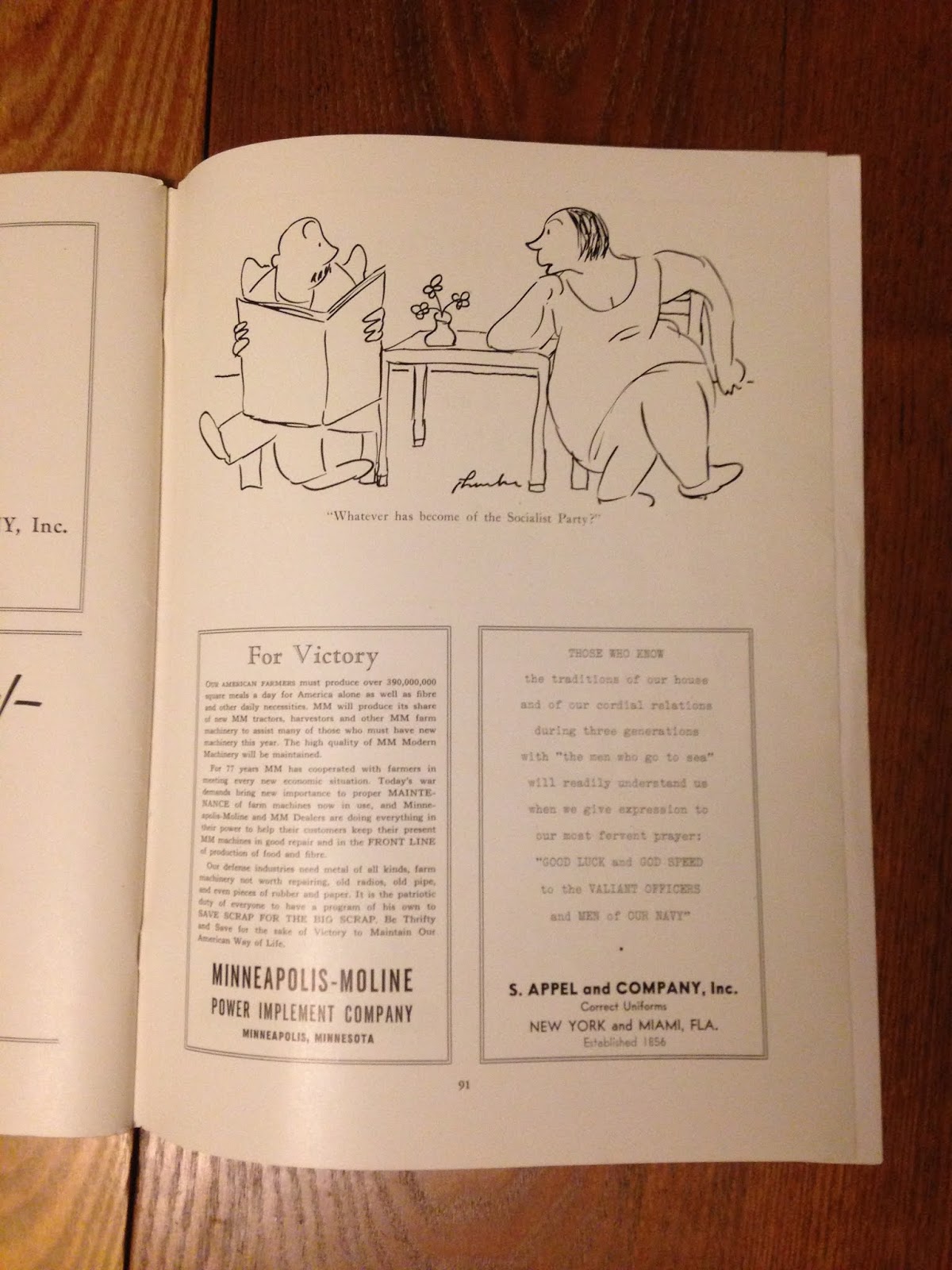
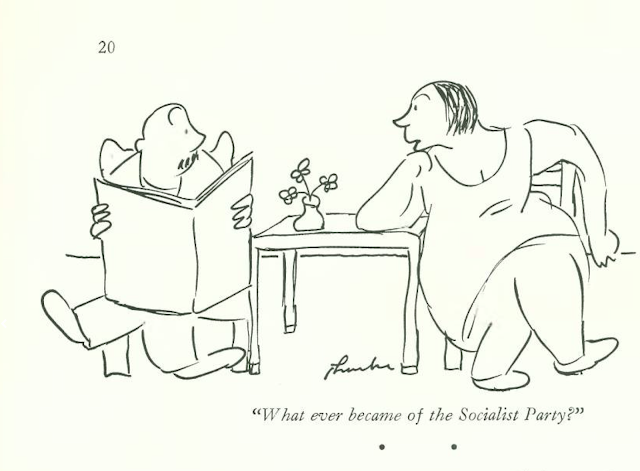
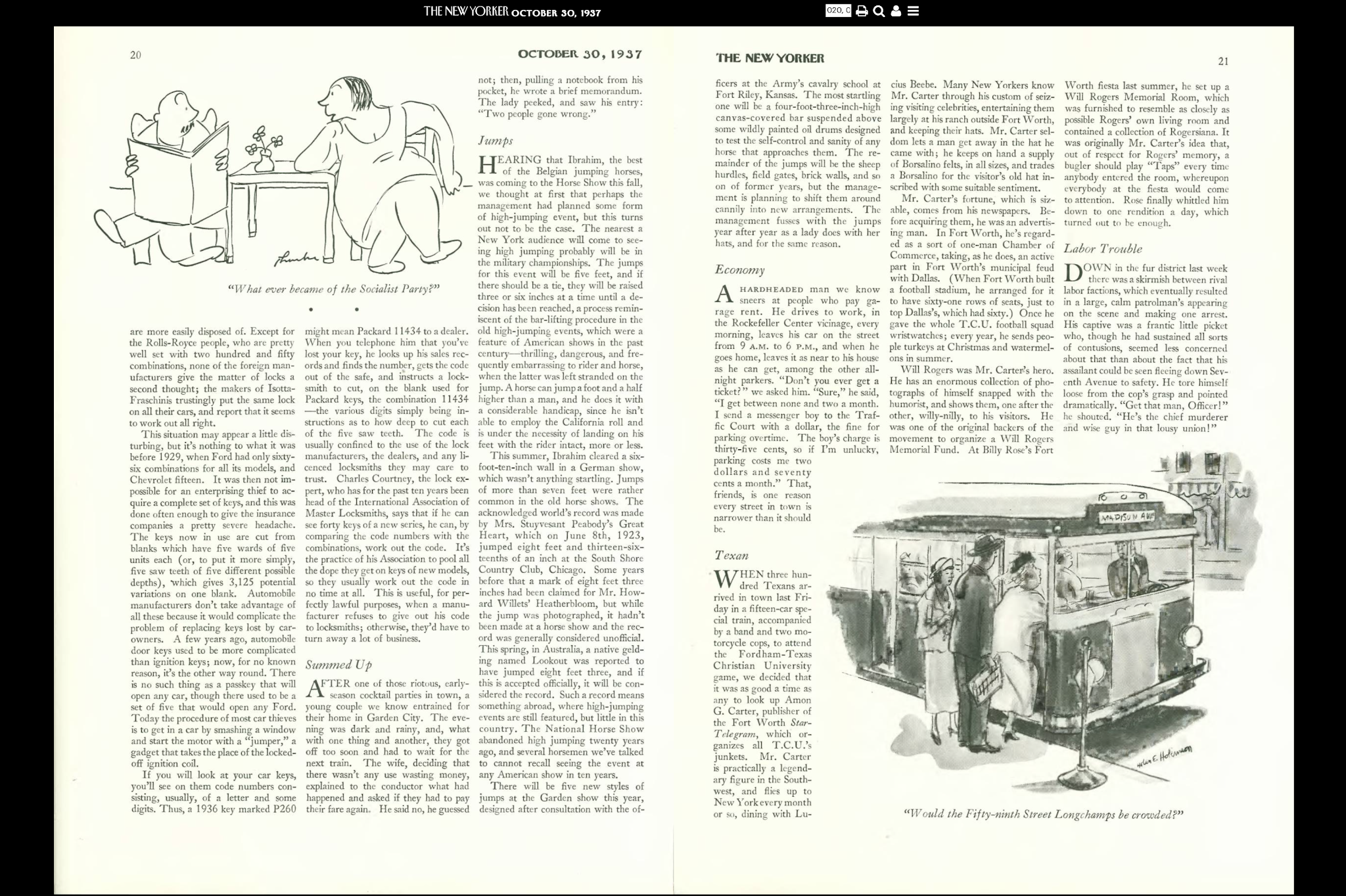
"Whatever has become of the Socialist Party?"
James Thurber
First published in The New Yorker, October 30, 1937, page 20


The captions are not identical. I think The New Yorker's caption packs a little more punch.

Cartoons by James Thurber and Helen E. Hokinson


Note:  My thanks to Joel Jacobus for finding this rarity. All of the photographs of the program are his. This is Joel's ninth contribution to this blog.

I would like to hear from anyone with further information on the publication history of these drawings as well as their current whereabouts. Are they held by the Art Students League? Are they with the 8 Henderson Place Foundation? Or are they perhaps in private hands?

Could someone please correct the year of the You Gotta Go Barclay poster on Wikipedia? It should be 1942.


The Attempted Bloggery Centennial Posts
 💯

Blog Post No. 100
Blog Post No. 200:  A Shaggy Dog Story


03400