Showing posts with label Tax Day. Show all posts

Thursday, April 22, 2021

Charles Cartwright: Starving Artist?

Dick Buchanan, the curatorial whiz behind the eponymous Cartoon Clip Files, is a man for all seasons—and that includes tax season. Here he provides us with a scan of a 1941 Collier's cartoon by Charles Cartwright, a cartoonist who has not previously appeared on this blog. The gag is set in an artist's garret where the artist's wife has learned of a new reason to possibly distrust him.
"Income tax? Paul! Have you been up to something?"
Charles Cartwright
Collier's, March 22, 1941

Scan by Dick Buchanan


Note:  My thanks go once again to Dick Buchanan for maintaining the celebrated Dick Buchanan Cartoon Clip Files and for sharing thereof. Dick has made a brand new contribution to Mike Lynch Cartoons, a post entitled "From the Dick Buchanan Files: Entertaining Company 1940 - 1966." This is Dick's 62nd contribution to Attempted Bloggery, a new record.


03604

Wednesday, April 21, 2021

Leonard Dove: Hyperbole at the Internal Revenue Service

To commemorate tax season, Dick Buchanan writes with another superb scan from his cartoon clip files. Who among us hasn't been tempted to resort to a little hyperbole when dealing with the Internal Revenue Service? To anyone who may have been audited or otherwise pestered by the IRS, Leonard Dove's beleaguered taxpayer from a 1961 Look magazine cartoon surely evokes empathy. The man's language is understandably hyperbolic, but whether he is aware of his own exaggerated rhetoric is not clear from the drawing, which depicts him as simply earnest and overwhelmed.
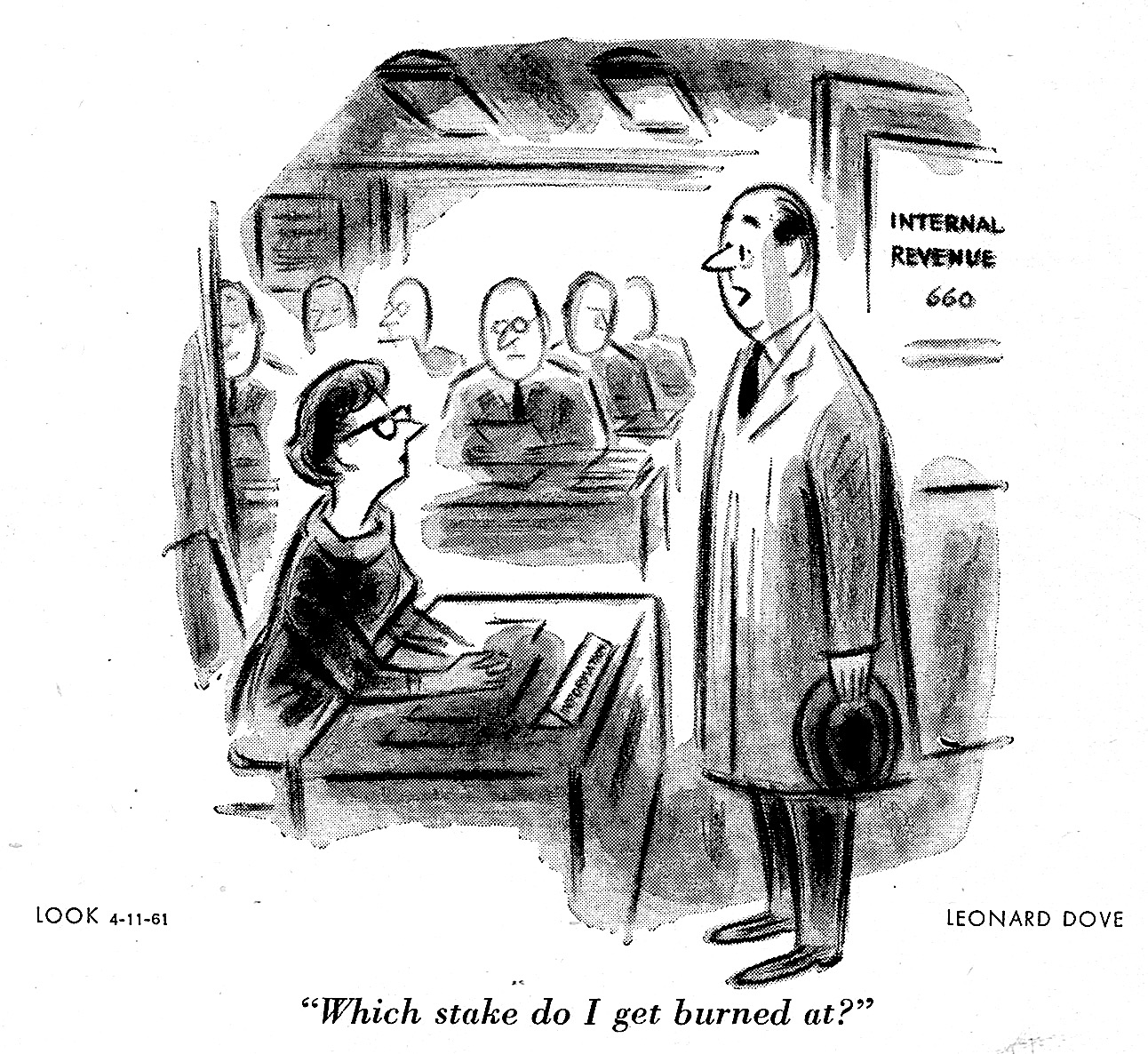
"Which stake do I get burned at?"
Leonard Dove
Look, April 11, 1961, page 122
Scan by Dick Buchanan


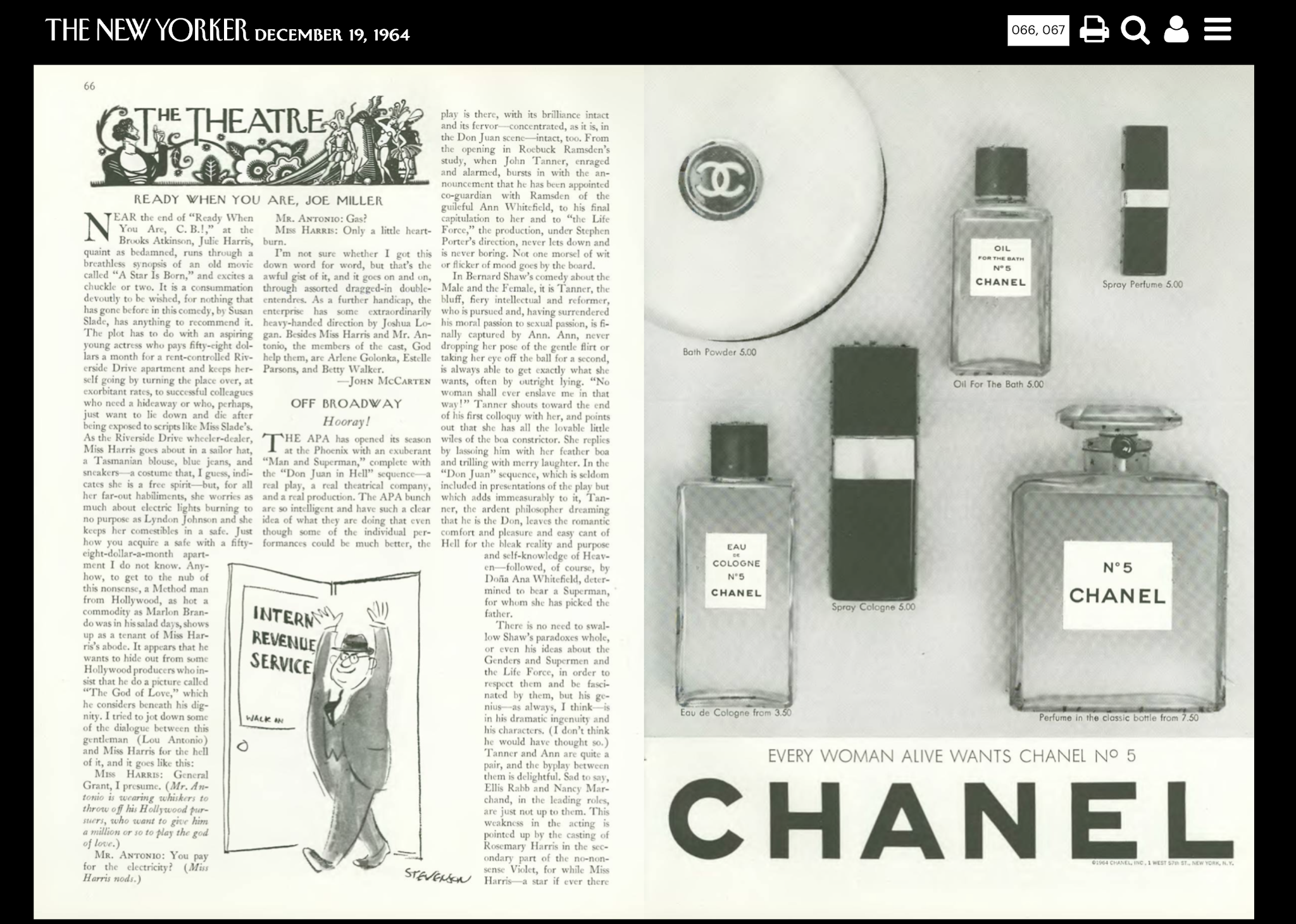
Dove, of course, was a New Yorker regular, which means this cartoon may very well have been rejected by the venerable magazine before it was shopped around and picked up by Look. Four years later, though, The New Yorker too would have its chance to play around with hyberbole in the setting of an IRS office. Amazingly, cartoonist James Stevenson manages to pull it off with a simple, wordless gag. The wry smile shown by Stevenson's taxpayer, in contrast to Dove's, indicates this man is very well aware of his own clowning around. Stevenson's cartoon appeared almost four years after Dove's and is memorable, a New Yorker classic. 
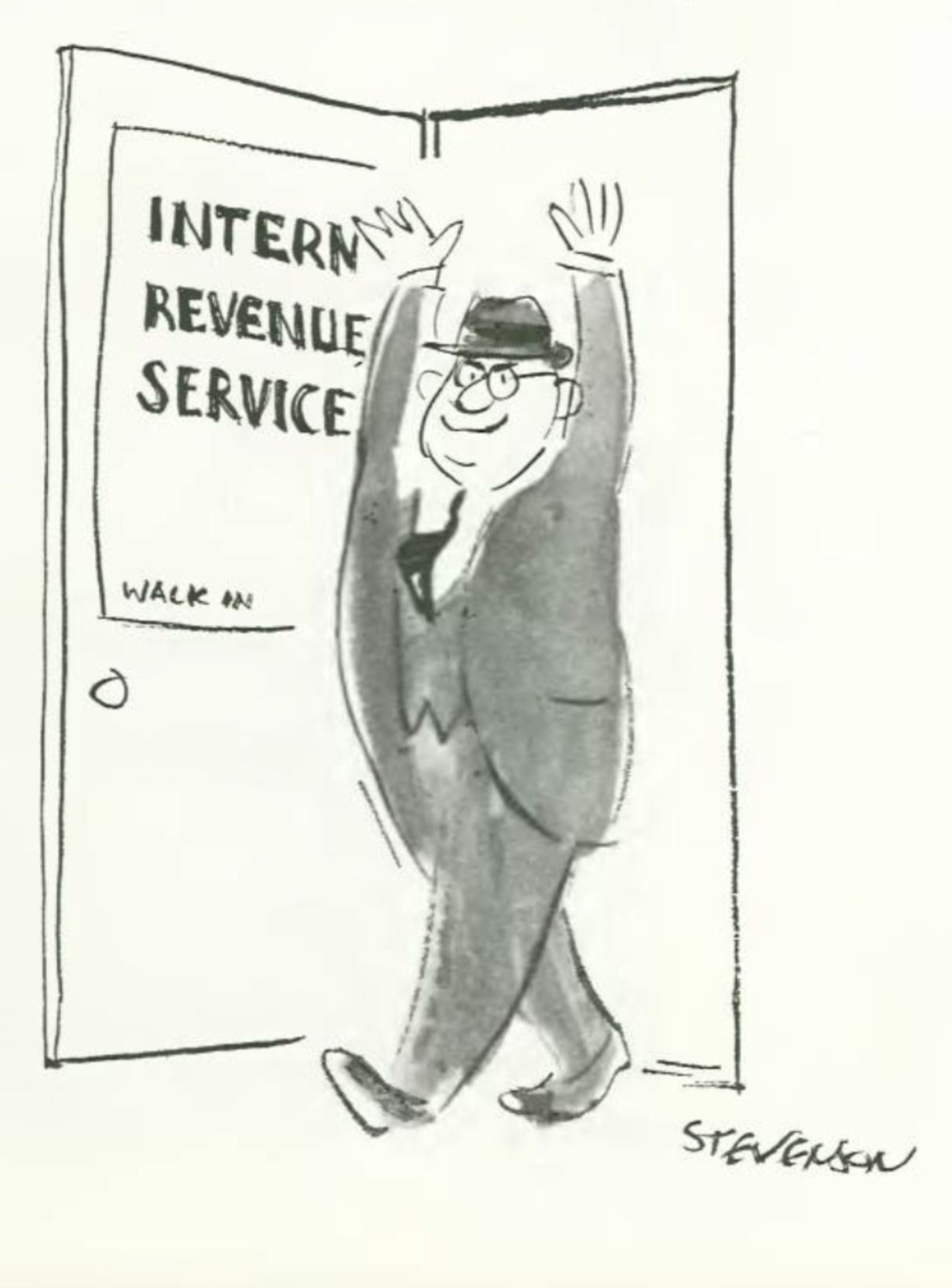
James Stevenson
The New Yorker, December 19, 1964, page 66


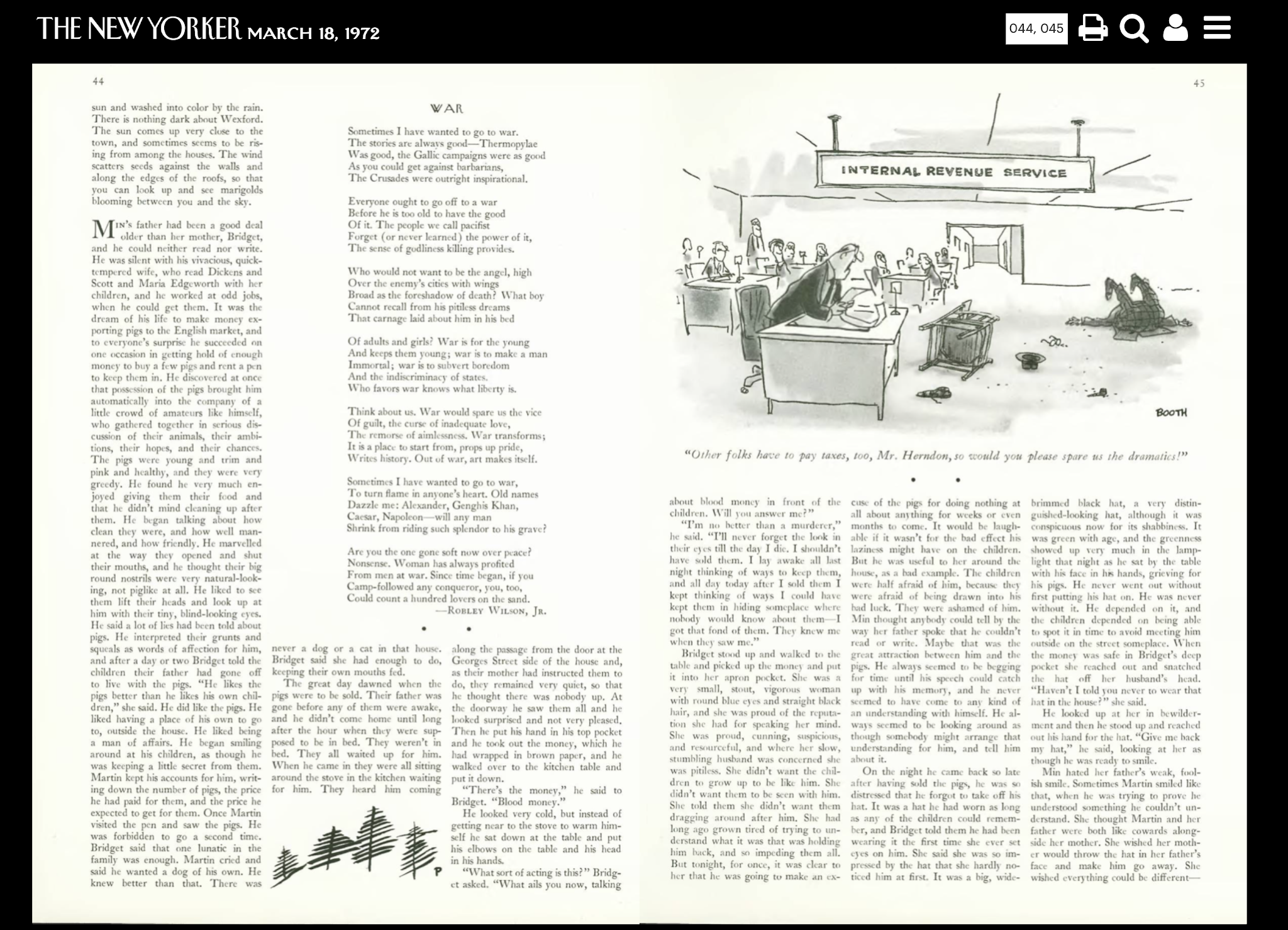
Is there room for another great cartoon on this topic? (Would I ask if there weren't?) You might think James Stevenson gets the last word, wordlessly, on the subject of exaggerated reactions to the tax collector, but his character's mimicking of a holdup victim does not quite end our story. In a cartoon dating from the 1972 tax season, cartoonist George Booth takes the taxpayer's overreaction up a notch into the realm of pure slapstick. As with Stevenson, the hyperbole is physical, not verbal; it is the flustered taxman who is left to refute the taxpayer's antics with some commonsense talk.
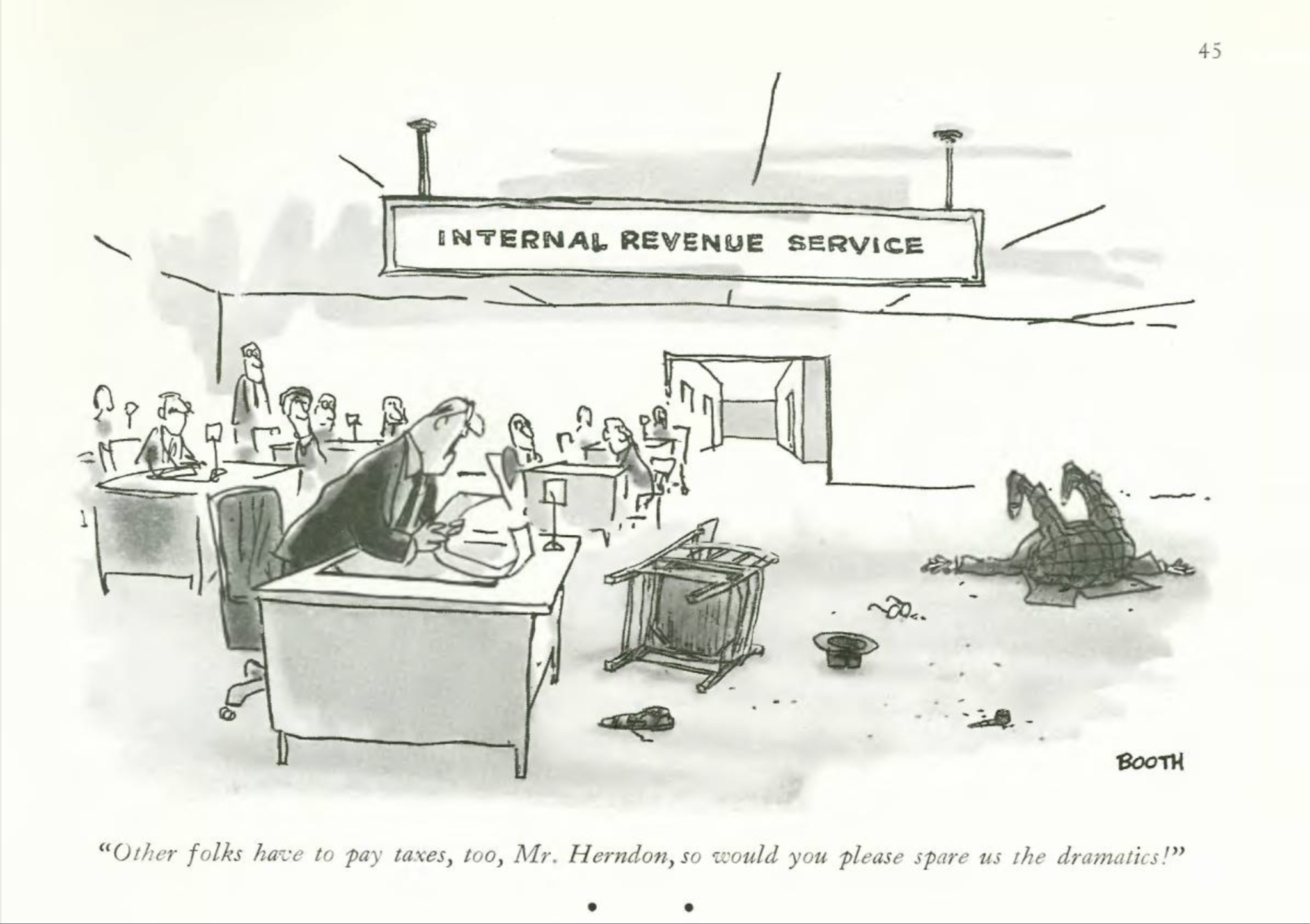
"Other folks have to pay taxes, too, Mr. Herndon, so would you please spare us the dramatics!"
George Booth
The New Yorker, March 18, 1972, page 45


Cartoon by James Stevenson. Ad by Chanel.
https://archives.newyorker.com/newyorker/1964-12-19/flipbook/066/


Spot drawing by P and cartoon by George Booth


Note:  My thanks to Dick Buchanan for his  beautiful scan of the Leonard Dove gag from his matchless cartoon clip files. Dick, you may recall, contributes regularly to Mike Lynch Cartoons, most recently a post entitled "From the Dick Buchanan Files: Certified Vintage Gag Cartoons 1940 - 1961." Dick is the only one I trust to certify gag cartoons as vintage. He also represents me at audits. This is Dick's 61st contribution to Attempted Bloggery, a record unlikely to be broken ever, or at least until tomorrow.

I'll jump at any excuse to highlight the work of Leonard Dove, James Stevenson, George Booth, and the like. Feel free to send such excuses in my direction.

Surely there must be other cartoon examples out there of hyperbolic reactions to a tax audit. I mean, is there really any other kind of reaction? Please let me know if you are aware of similar taxing cartoons that fit the bill.

By the way, who might be P, the spot artist from 1972? Anybody?


03603

Sunday, April 14, 2019

E. Simms Campbell: Dependent Exemptions

E. Simms Campbell's Harem Girls cartoon from the April 1937 Esquire may seem a tad dated today. Now, as a result of our new tax law, after the 2017 tax year dependents are no longer subject to an income tax exemption, although the standard deduction has been increased. Someone is going to have to inform the sultan.

"You mean I can claim an exemption if I have children?"
E. Simms Campbell
Esquire, April 1937, page 42


Quick Links to the Attempted Bloggery Archives:

02894

Monday, April 13, 2015

Income Tax Calculator: Bob Knox Original New Yorker Cover Art

Artist Bob Knox's 1989 New Yorker cover mixes the old and the new. An ancient abacus is enlisted to perform the calculations needed to complete the modern income tax return. Today, it is the paper form 1040EZ that is beginning to look ancient as most taxpayers file electronically. The paper of the old tax form has faded on the original artwork, while the painted abacus remains vibrant.

Bob Knox, Original cover art,  The New Yorker, April 17, 1989

Bob Knox's signature

The back of the artwork

Purple lettering was planned for the cover, but they went with more of a red.

EBay Auction Ended November 23, 2014

EBay Item Description
EBay Bid History
It all happens in the last 18 seconds.


Bob Knox, Original cover art,  The New Yorker, April 17, 1989

Bob Knox, The New Yorker, April 17, 1989


Note:  For further Attempted Bloggery posts about the art of Bob Knox, just click on the link.

I don't know why you'd want to read more blog posts about taxes, but if that's what you're here for I'm your guy. Still, maybe you'd be better off sampling some further examples of original New Yorker cover art. Then get to your taxes.

01494

Tuesday, April 15, 2014

Dept. of Understatement

The following Newsbreak was published in the New Yorker in 1956 and is today rescued from obscurity here in honor of Tax Day. Sixty years ago, Barium Steel was a Fortune 500 company. Now it seems to be gone, perhaps on account of bad writing. Corporations still pay taxes, don't they?

The New Yorker, February 18, 1956, page 62


Note:  Read more posts on taxes here.

See older posts in celebration of on National Library Week here.

Posts about Passover may be found here.

01119

Sunday, April 14, 2013

Tax Day

In the United States, federal income tax needs to be filed by tomorrow, April 15. Back in 1937 when this New Yorker cover by Constantin Alajálov was published, the income tax was due on March 15. As you can see, at the time people were as conflicted as they are today about having to pay it.


0691

Monday, June 25, 2012

Koren Considerations

This piece of original advertising illustration art by Edward Koren is entitled What to Consider Before Wading into Tax-Free Municipals. It is already matted and was sold on eBay with the Buy It Now for less than $100, shipping included. A steal!

Edward Koren, What to Consider Before Wading into Tax-Free Municipals


Edward Koren, What to Consider Before Wading into Tax-Free Municipals, matted

Edward Koren, What to Consider Before Wading into Tax-Free Municipals, matted


Edward Koren, What to Consider Before Wading into Tax-Free Municipals
EBay Winning Bid with Buy It Now


Edward Koren, What to Consider Before Wading into Tax-Free Municipals
EBay Item Description

Edward Koren, What to Consider Before Wading into Tax-Free Municipals

Note:  My previous post on artist Edward Koren includes a drawing recently added to my own collection and can be found here.

0377

Monday, April 16, 2012

Wabbit Season? Duck Season? No, Tax Season!

Bob Knox's New Yorker cover from 23 years ago captured the spirit of the American tax season and its annual rite of federal tax preparation. It featured the amusing pairing of an abacus with a collage of impenetrable tax forms. Just after this cover appeared, around 1990, electronic filing was introduced. Now nearly 80% of tax returns use IRS e-filing, or almost 100 million last year. The printed 1040 form is no longer mailed to households and is fast becoming obsolete.

Bob Knox, The New Yorker, April 17, 1989

0306